
Most brand photoshoots end the same way. A company spends real money, gets a gallery of 200-plus pretty pictures back, uses maybe fifteen of them once, and the rest go quietly to die in a Drive folder called "Brand Photos 2025" that nobody opens again.
That's not a camera problem. It's a planning problem. The gap between a brand photoshoot that hands you a few nice images and one that feeds your marketing team for months is decided before anyone shows up on set: the brief, the shot list, the wardrobe, the schedule. The unglamorous prep is what makes the spend pay off.
If you're still fuzzy on what a brand photoshoot even is, start here. This guide is the next step, how to plan one so the session doesn't get wasted. Most of what follows I learned the hard way shooting brands around Austin, including a few loud, neon mornings with Holey Moley Golf Club.
What makes a brand photoshoot actually get used?
Knowing where every photo is going before you book the date. That one habit separates a usable library from a folder of cool-looking venue shots nobody has a job for.
Most companies do it backwards. They book a photographer, show up, take some good-looking photos, then try to figure out what to do with them afterward. Flip it. Open your marketing calendar first and work back from there:
- Website pages launching or getting refreshed, and the exact shots each one needs
- Your social plan for the quarter: how many posts a week, and which formats (feed, Stories, Reels covers, LinkedIn)
- Paid campaign creative, in the sizes and orientations the ads actually run
- Email: headers, inline images, promos
- Print: brochures, menus, signage, event collateral
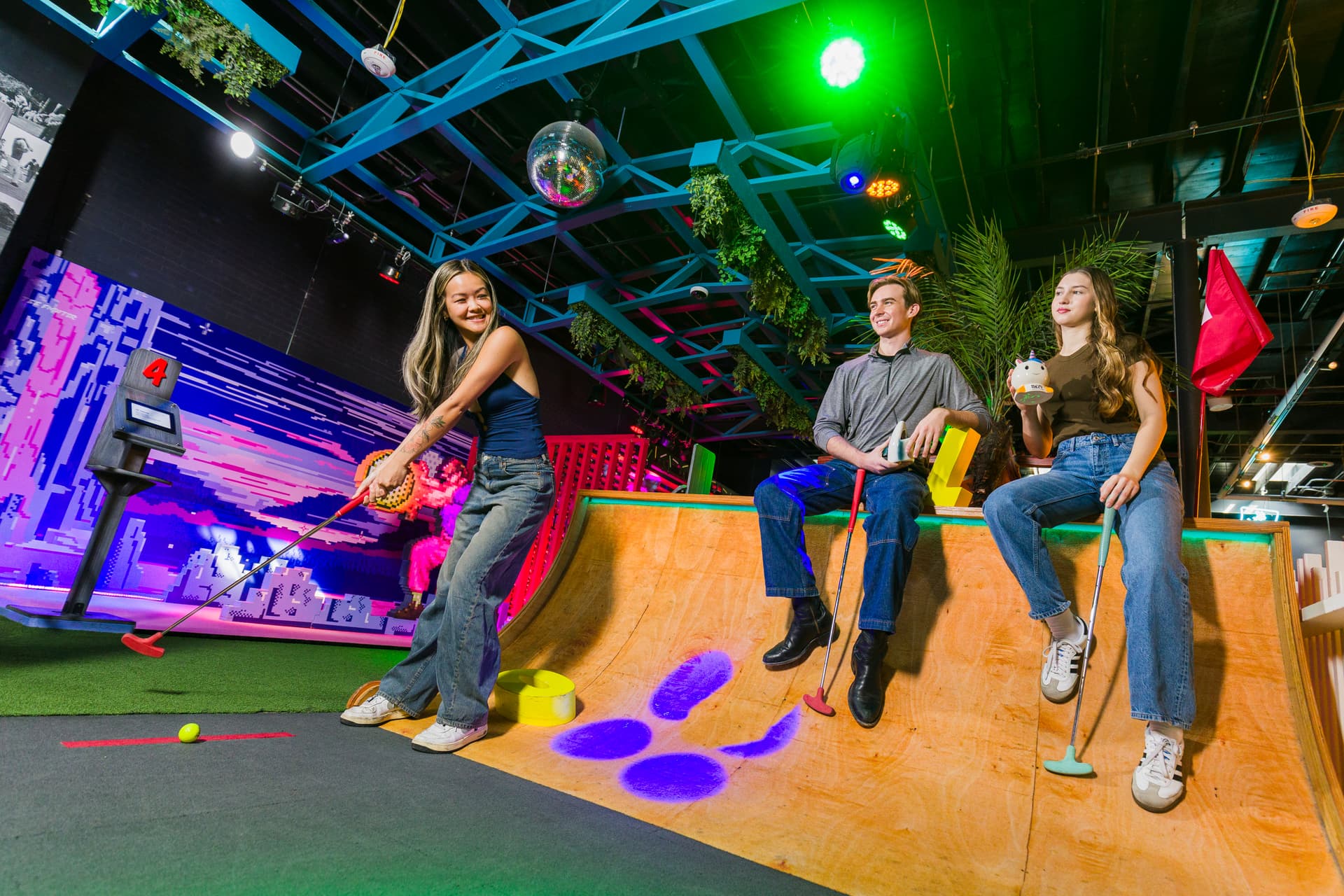
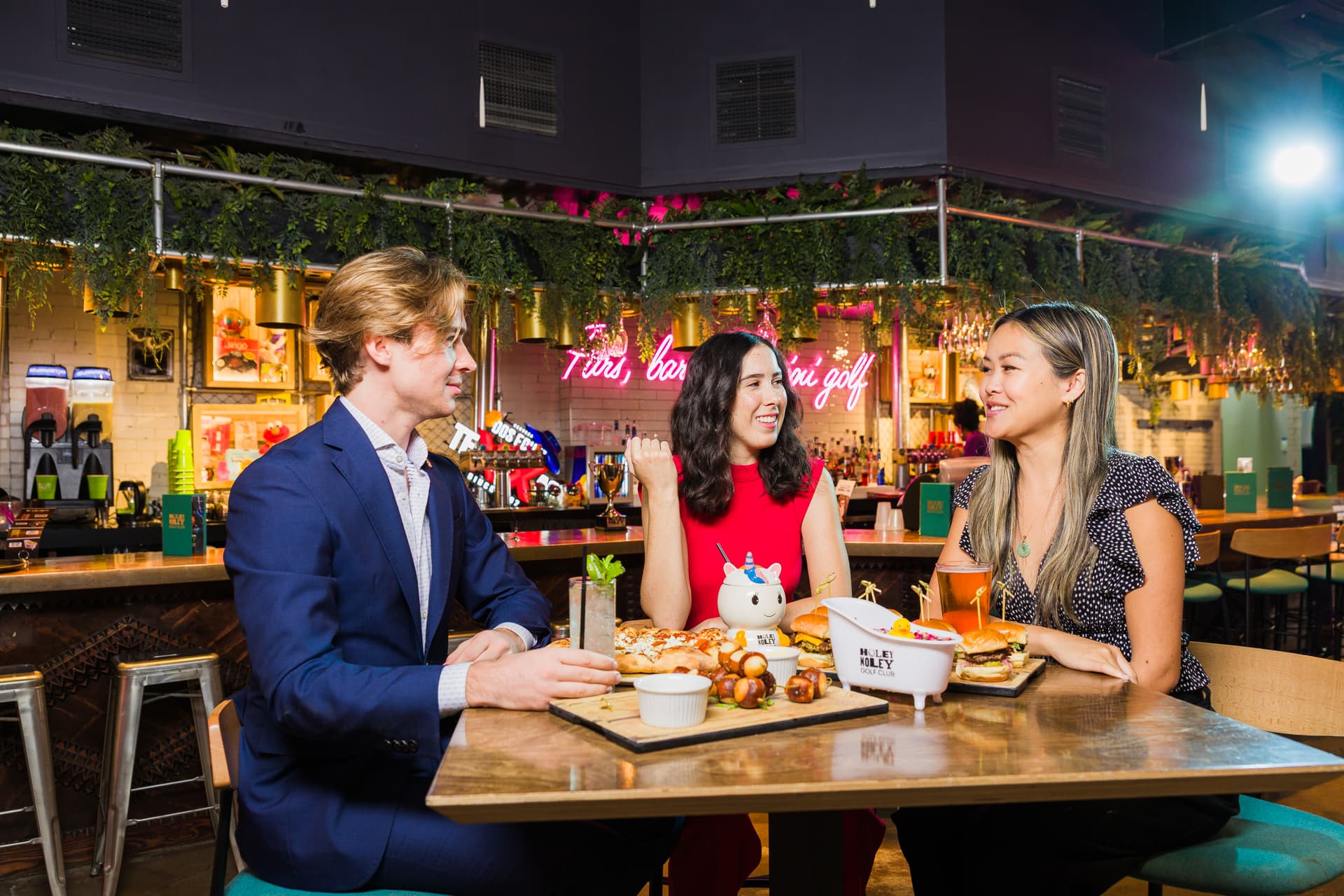
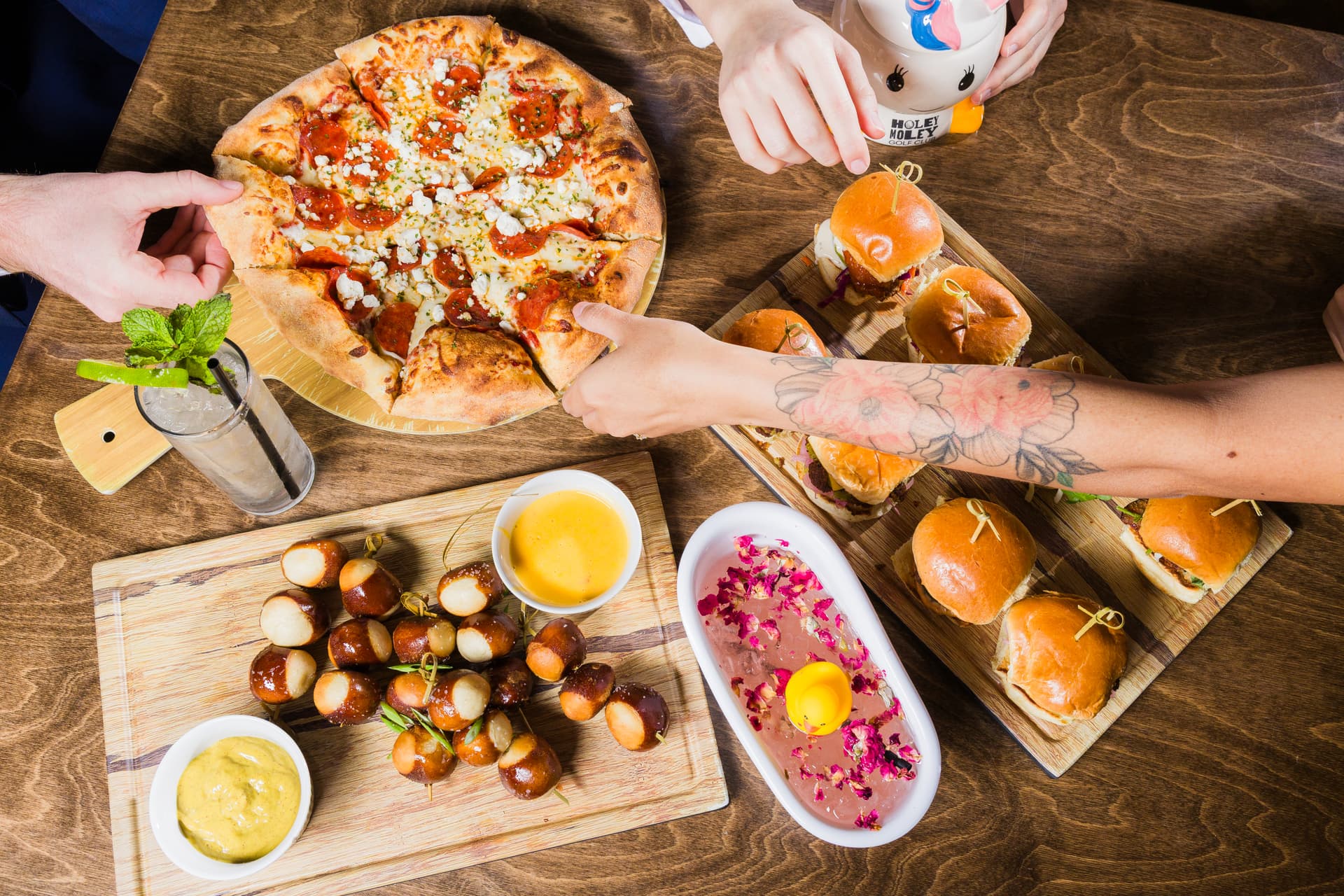
When I worked with Holey Moley, we mapped which pages needed content and what their social calendar looked like for the coming quarter before we talked about anything fun. That's what shaped every later call: how many models to book, which corners of the venue to prioritize. They didn't leave with a generic batch of venue photos. They got a library sorted by use case, so the social team could pull "party/bachelorette" for one campaign, "kids birthday" for another, "corporate events" for a third.
What should a brand photoshoot shot list include?
Three things: your must-have shots, your nice-to-haves, and reference images. The shot list is the most important document in the whole process, and it's the one people skip.
- Must-haves: the specific frames you can't leave without. A homepage hero, a product in use, a real group-interaction shot.
- Nice-to-haves: the aspirational ones you'll grab if the day runs ahead of schedule.
- Reference images: this is the big one. Pull examples from brands you admire, competitors you want to look nothing like, styles you keep saving.
Why reference images change the whole shoot
Hand me a mood board and you change how I shoot, on purpose.
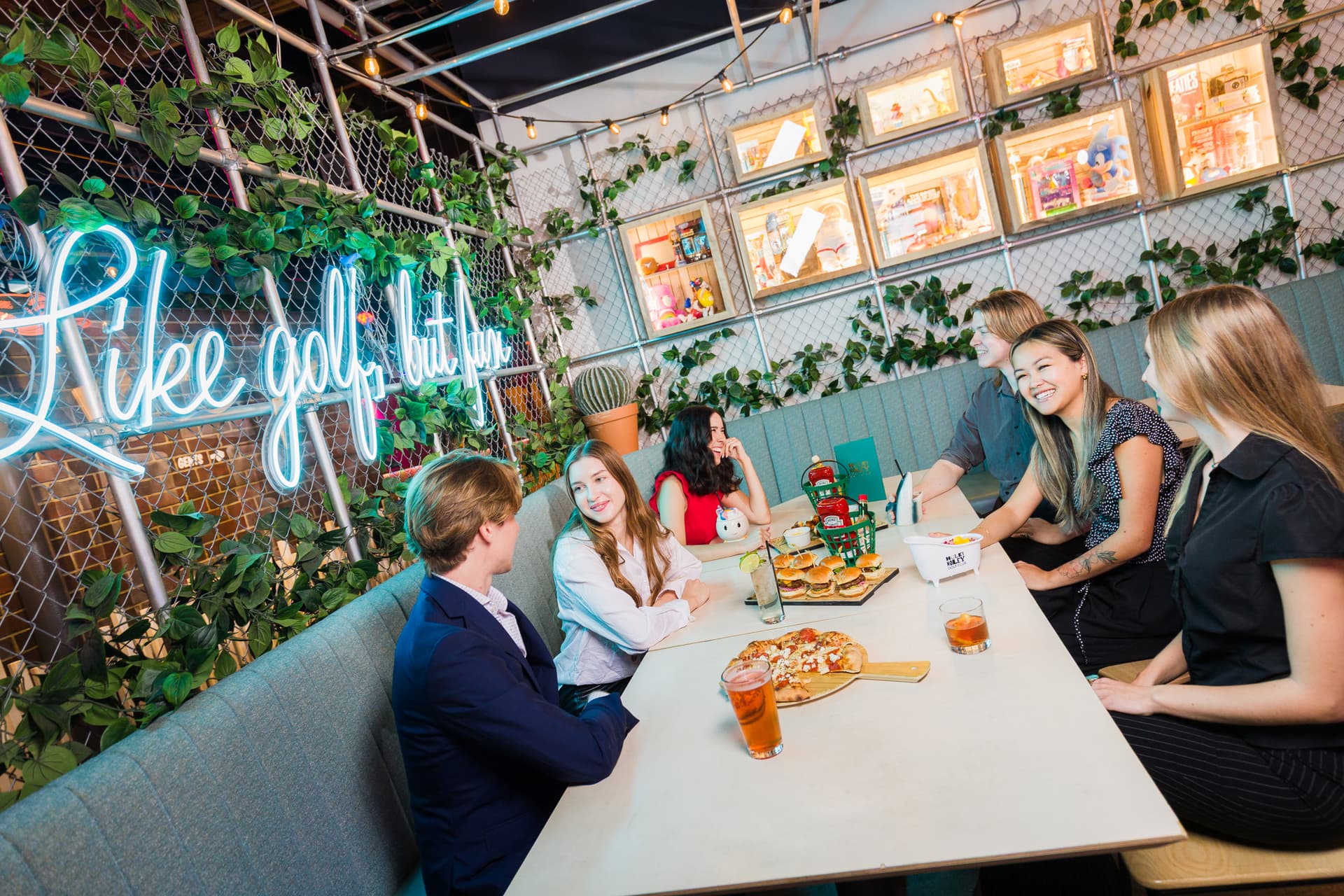
Holey Moley's brand guide called for super wide-angle frames, shot close to the subject, often at dramatic tilts. Diagonal lines, proportions pushed a little past real, everything a bit alive. That is not my default. My training says keep verticals vertical, don't warp bodies with a wide lens, keep the composition balanced. The rules. I happen to love breaking them, and because I'd seen their references, I knew this brand wanted them broken. They wanted weird and loud, frames that feel like actually standing in the room.
Without that brief, I'd have delivered clean, technically correct images that looked like every other venue's marketing. With it, I delivered photos that looked like theirs. That's the whole difference.
So don't assume your photographer will read your brand's mind. I research a brand before every shoot, but if you're shifting your marketing direction, a style guide is worth more than any brief I could write on my own. Show me where to follow the rules and where to break them. A twenty-minute call over a mood board is often the line between "nice photos" and "these are exactly what we needed."
Should you hire models, or use your own team?
Depends on the shoot. For authentic behind-the-scenes culture content, your real team is the right call; nobody fakes real culture. For polished, campaign-ready images, professional models almost always earn their fee. This is the line item companies love to cut, and it's usually where the savings quietly disappear.
Professional models show up with fresh, styled hair (no grow-out, no "meant to get a cut"), clean neutral nails (minor until someone's holding your product and the chipped polish is all anyone sees), the sense to steam a wrinkle and dress themselves, and real camera comfort. They know their angles, take direction fast, and don't freeze when the lens turns their way.
When employees fill in, subtler costs creep in:
- Retouching balloons. Chipped nails, visible roots, a jacket that doesn't sit right, most of that can't be fixed cleanly in editing. When it can, it adds hours to post, which delays delivery, which delays your marketing. You saved on models and lost weeks of content.
- Comfort swings wildly. A stiff, self-conscious subject reads stiff and self-conscious on camera, no matter how good the photographer is. Models who know their angles and how to cycle through poses allow your photographer to focus on framing, lighting, and details rather than shift gears into directing the posing of each shot.
- Consistency drops. If you're building a library across several shoots (you should be), employee availability shifts. Models can be rebooked.
Here's the part that makes it easy: you don't need a roster, your photographer should have one. I keep relationships with Austin modeling agencies and freelance talent across different looks, ages, and body types, so I can cast, coordinate wardrobe sizes, and run the talent on the day while your team stays on creative direction. For Holey Moley I coordinated 7 models across a single day, enough for real variety so the same three faces don't land on every page of the site, without the group getting unwieldy.
How do you get the most out of one shoot day?
Control the space and stack two concepts into it. A well-run day feeds several campaigns at once; a loose one burns the budget in half the time for half the output.
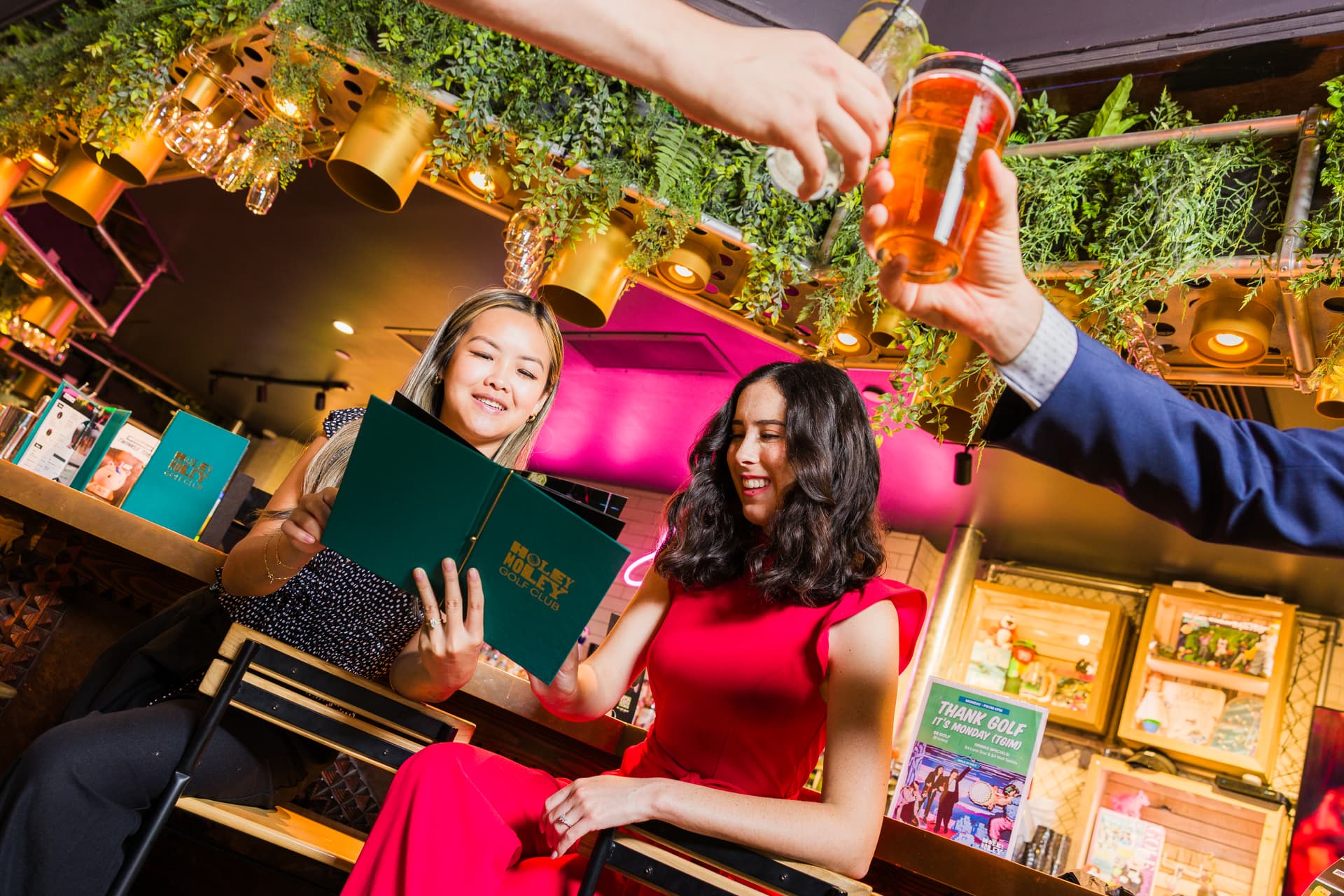
For styled work, carve out time when the photographer has full control of the room. We shot Holey Moley in the mornings, before the venue opened. That bought us no patrons wandering through composed frames, full access to set lights and move furniture, no clock from operations, and clean control over the neon and off-camera flash without tripping a customer. If you're shooting at your own location, close it, or a section of it. If you can't, book your slowest hours. Two or three hours of lost revenue costs less than reshooting because a stranger walked through your hero shot.
Then double the output without doubling the budget. For one Holey Moley session, every model brought two outfits: one polished and corporate-leaning, one casual "out with friends." That gave us two distinct libraries in a single day:
- Corporate-events page: business casual, networking, team moments over mini golf
- Birthday/bachelorette page: the same people in casual clothes, laughing and competing
With 7 models we shuffled the groupings between concepts, so the corporate page and the party page never looked like the same shoot recycled across the site. One day, seven models, two changes each, two full libraries. That math makes marketing directors happy.
When should you think about lighting?
First, before almost anything else. It's the photographer-specific piece most planning guides skip, and it's a big part of why photos read professional or amateur.
Natural light moves all day. A space that glows at 9am can go harsh and flat by noon, and if your shoot runs 8am to 2pm that shift shows up across your set. So I scout the space ahead, in person or from photos and video you send, and build the schedule around the light: hit the naturally bright areas while they're at their best, then move to spaces I can supplement with flash as the daylight turns. For a controlled interior like Holey Moley (neon, ambient, venue fixtures) this matters less. For anything with windows, outdoor areas, or mixed light, the time-of-day plan matters enormously. So when your photographer asks to start thirty minutes earlier, they're not being difficult. They're protecting the light on your hero shots.
How do you make brand photoshoot images last?
Shoot for the next 6 to 12 months, not next week's post. The best brand photoshoots produce a library you're still pulling from two quarters later. A few ways to build that in:
- Skip ultra-trendy styling that'll date in three months. Classic with a twist ages better.
- Shoot horizontal and vertical for every key setup. You'll need both across platforms.
- Get detail and texture shots alongside the heroes. They become graphic backgrounds, email headers, and social filler, the workhorses of a content calendar.
- Capture a range of energy, not just peak excitement. Calm, focused, celebratory; different moods carry different messages.
- Leave negative space in some frames. Your design team will thank you when they need room for text on a hero or an ad.
The brand photoshoot planning checklist
The condensed version. Save it for your next shoot.
1-2 weeks out
- Define where the photos will live (website, social, ads, print)
- Build the shot list: must-haves and nice-to-haves
- Share a brand style guide or mood board with your photographer
- Book models, or confirm your team members
- Coordinate wardrobe to brand colors, plus extra outfit changes if you're targeting multiple campaigns
- Book off-hours if you're shooting at a business location
3-5 days out
- Photographer scouts or reviews the space for light and logistics
- Lock the shot list and shooting schedule with photographer and models
- Confirm wardrobe, hair, and grooming
- Prep props, products, and branded materials
- Name one point person for day-of creative calls
Day of
- Arrive early for lighting setup (allow 15-30 minutes before talent)
- Quick shot-list walkthrough before the first frame
- Shoot heroes first, while energy and styling are freshest
- Handle outfit changes and group shuffles between setups
- Grab B-roll and detail shots in the gaps
- Review key shots on the back of the camera with the team during the shoot, not after
After
- Gallery delivered in 7-14 business days, depending on scope
- Images organized by use case if you planned it that way
- Full commercial usage rights on everything delivered
The bottom line
A brand photoshoot is only as good as the planning underneath it. The photography (the light, the editing) is the easy part for a professional. The hard part is making sure every frame has a job and every dollar spent on models turns into content your team will actually raid next quarter.
Nail the plan and the day runs itself. Want a sense of the range first? The branding portfolio shows what these shoots look like finished, the branding services page covers how a session comes together, and pricing lives here. When you're ready, let's start with a creative brief and I'll help you build the shot list and handle the production so your team can stay on the vision.
Related: