
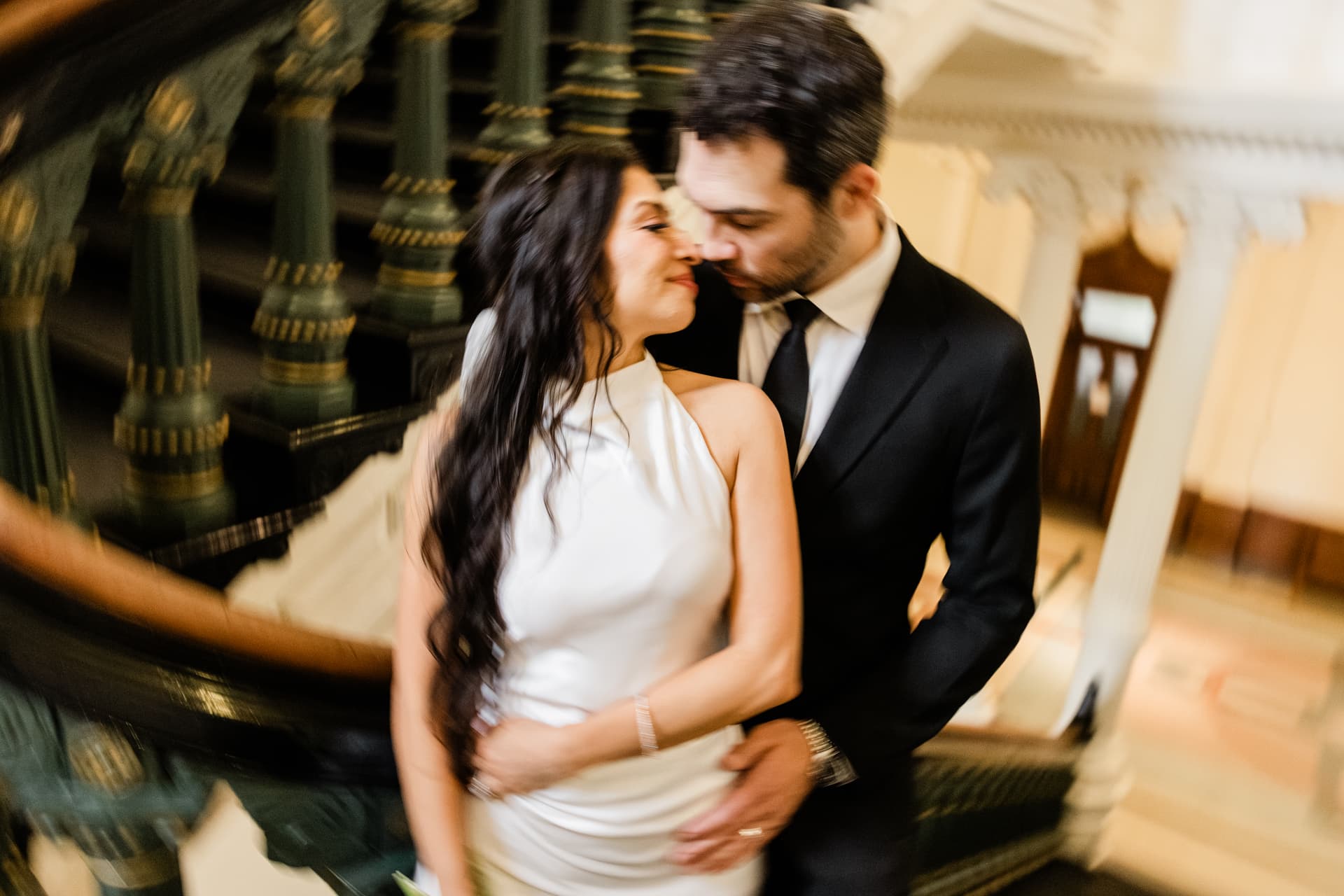
The courthouse wedding has quietly stopped being the budget option and started being the point.
I've watched this shift happen in real time. Couples who could absolutely throw the 150-person thing are choosing thirty minutes in a downtown courtroom instead, then spending the rest of the day doing whatever they actually want. Tacos. A hotel bar. Their own back porch. It's not a compromise anymore. It's a preference.
But here's the trap, and I say this as someone who has photographed a lot of these: a courthouse elopement is the easiest wedding to book and the easiest one to accidentally rush. There's no planner, no venue coordinator, and no timeline emailed to you three weeks out. You book a slot, you show up, and roughly twenty-two minutes later you're legally married and standing on a sidewalk in the middle of a Tuesday going "so... now what?"
The now-what is the whole thing. This guide is the logistics nobody hands you: how the Travis County paperwork actually works, why the ceremony slot you pick quietly decides what your photos look like, and how to build a downtown afternoon around the Capitol that feels like a wedding day instead of an errand.
If you're still deciding between a courthouse ceremony and something else entirely, start with my broader Austin elopement guide, which covers venues, Hill Country spots, and the whole landscape. This piece assumes you've picked the courthouse.
Where a Travis County courthouse wedding actually happens
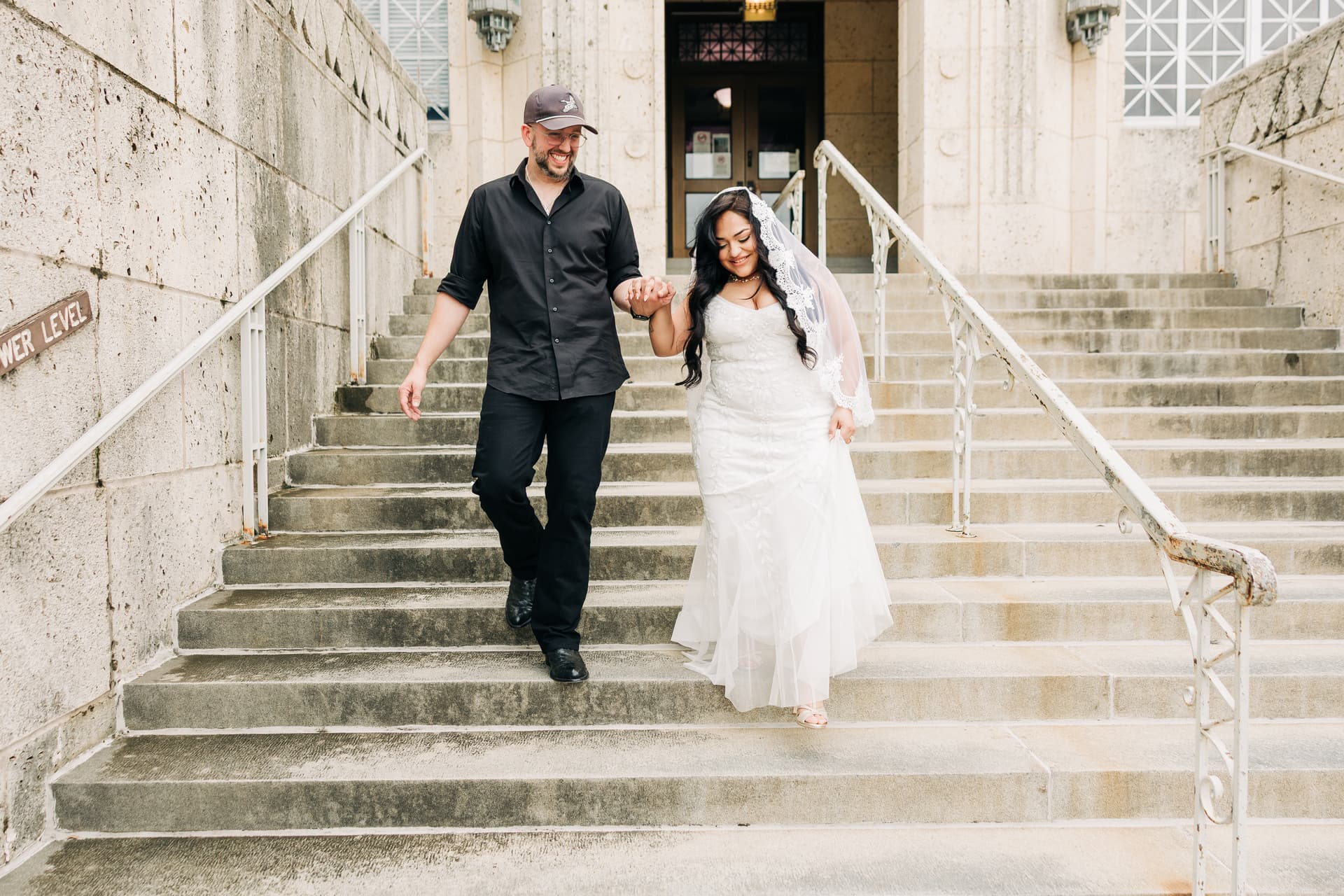
Two different buildings on Guadalupe Street, and mixing them up is the most common day-of mistake I see.
You get the license at the Travis County Clerk's office in the Civil and Family Courts Facility, 1700 Guadalupe Street, 4th floor.
You get married at the Justice of the Peace, Precinct 5, in the historic Travis County Courthouse at 1000 Guadalupe Street, Suite 112. The ceremony happens in the courtroom itself.
The historic building is the one you want photographically. Stone, scale, proper old-courthouse gravity. The newer facility is where the paperwork lives and it looks like where paperwork lives.
To book a ceremony you contact Precinct 5 directly at (512) 854-9049 or JP5Weddings@traviscountytx.gov. Appointments run in 30-minute slots, and the ceremony itself takes ten to thirty minutes depending on whether you write your own vows. Walk-ins are sometimes possible, but on a day where the whole point is not being stressed, book the slot.
One honest caveat: county pages go stale, and the JP5 wedding page has carried an "expired" flag. Call and confirm your fee, your slot, and your guest count when you book rather than trusting anything you read online, including me.
The paperwork, in the order you actually do it
1. Both of you go get the license, in person
Both applicants appear together with original photo ID. If one of you genuinely cannot be there, Texas allows an affidavit of absent applicant, but that's a form-and-notary situation, not a "he's parking the car" situation.
The formal license is $80. It's valid for 89 days and expires on the 90th, so there's no advantage to grabbing it six months early.
2. Then you wait 72 hours
This is the one people get wrong, and it's the one that can actually blow up your day.
Texas imposes a 72-hour waiting period between the license being issued and the ceremony taking place (Texas Family Code section 2.204; the county clerk states it as a three-day wait). It is not a formality and the judge will not wave it through. If you get your license Thursday afternoon and booked a Friday morning ceremony, you are not getting married on Friday.
Get the license at least a full week before the ceremony. It costs nothing to have it sitting in a drawer.
3. Or skip the wait (and save $60) with a premarital course
There are four ways out of the 72 hours: active-duty military, Department of Defense employees and contractors, a judicial waiver, or a Twogether in Texas premarital education certificate.
That last one is the good deal, and almost nobody mentions it. The state-approved course waives the waiting period and drops your license fee from $80 to $20. The certificate is valid for a year. If you're eight hours of coursework away from saving sixty dollars and a scheduling headache, it's worth a look.
The part nobody warns you about: your ceremony slot decides your photos
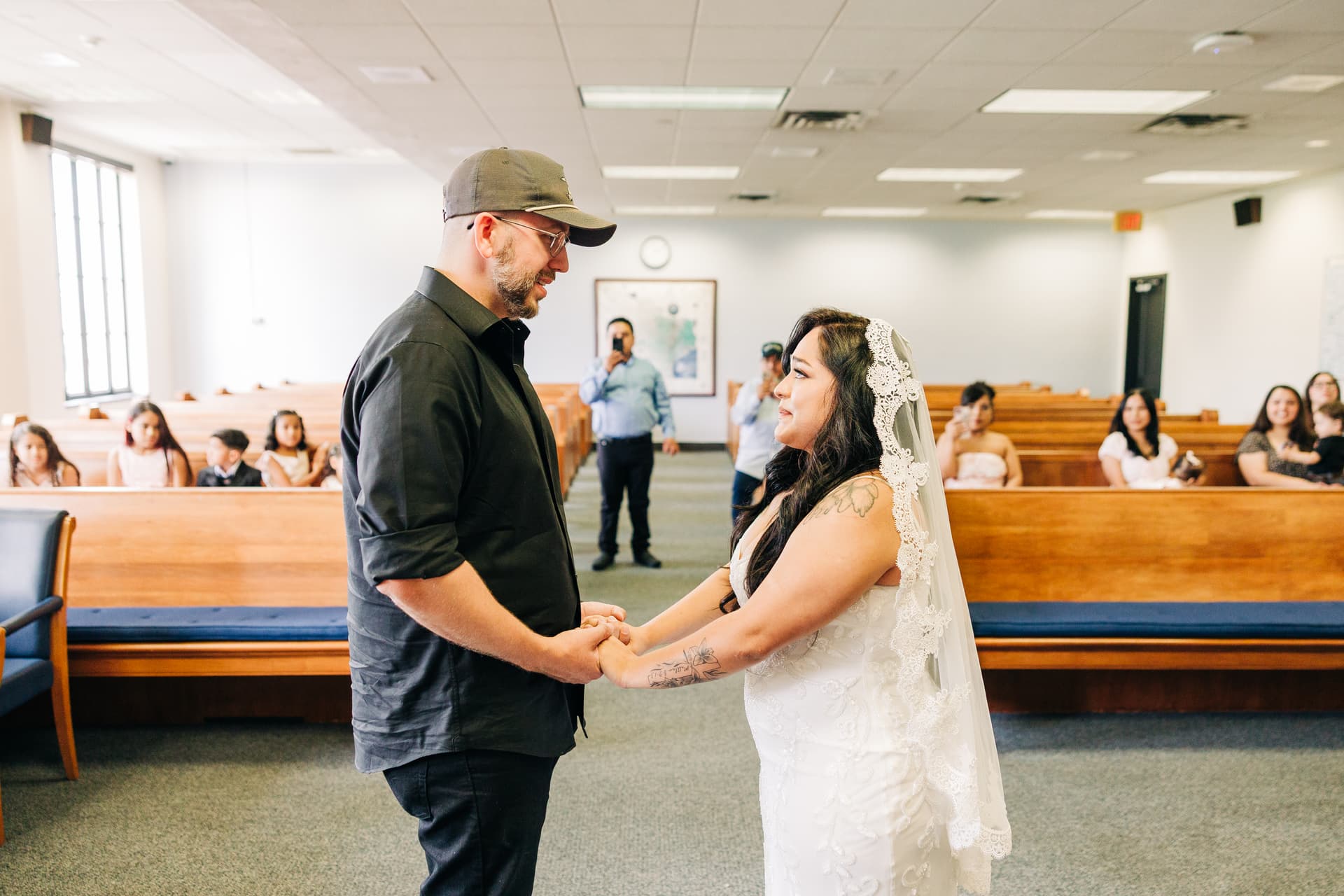
Here's where logistics and photography stop being separate conversations.
The courthouse operates on government hours. Monday through Friday, 8:00 a.m. to 5:00 p.m., with the lobby opening at 8:30 and everything closed for lunch from 11:45 to 1:00. That's it. No weekends, no evenings.
Which means your wedding photos are happening in the middle of a weekday, in Texas, at whatever hour a courtroom calendar had free. Every other kind of wedding gets planned around golden hour. This one gets planned around a docket.
That's not a disaster. It just means the slot you pick is a photographic decision, and most couples make it without realizing they're making it.
The first thing your slot decides is the light right outside the courthouse, which matters because that's where your first portraits happen no matter what else you plan. The sun tracks west across the day, and by the afternoon it sits behind the building. That drops the whole front of the courthouse into soft, even open shade: no squinting, no harsh shadows across your faces, and a facade that photographs beautifully instead of blowing out. In the morning, the sun is low and pointed straight at the front of the building, which is a much harder starting point.
Here's the honest breakdown:
| Slot | What the light is doing outside the courthouse | My take |
|---|---|---|
| 8:30 to 9:30 a.m. | Low sun aimed directly at the front of the building. Bright, contrasty, and you'll be squinting into it. | Workable, but the toughest light for portraits right by the doors. |
| 10:00 to 11:30 a.m. | Sun climbing and still on the facade. Usable shade is limited. | Fine for the ceremony. Better if we move somewhere shaded afterward. |
| 1:00 to 2:30 p.m. | Sun swinging west and beginning to drop behind the building. The front starts to even out. | Good, and getting better as the afternoon goes on. |
| 3:30 to 4:30 p.m. | Sun sits behind the courthouse. The entire front is in soft open shade. | The pick. The easiest light of the day, exactly where you're standing. |
The second thing your slot decides is where we go afterward, and that's a choice we make around the clock rather than a fixed itinerary. Finish at midday and I'll steer us toward shade and interiors. Finish late in the afternoon and the whole city opens up, because you're walking out into the best light of the day with somewhere to spend it.
The seasonal swing matters here too. A 4:30 ceremony in December means you step outside into golden light with maybe an hour before dark. The identical 4:30 ceremony in June puts you outside with the sun still high and three hours until sunset, which is more time but harsher light to work with.
There's also a version of this I quietly recommend to couples who care about the images: decouple the two entirely. Get married at whatever slot you could actually book, go have a long celebratory meal, then meet me back out at golden hour in the same clothes. You get a whole day instead of a hurried thirty minutes, and the photos are unrecognizably better.
A timeline that actually works
For a 3:30 p.m. ceremony, here's roughly how I'd build the day:
- 2:45: Meet outside the historic courthouse. Portraits on the steps and along the Guadalupe Street facade, with the building doing the work of shading you.
- 3:15: Head inside, find Suite 112, breathe.
- 3:30: Ceremony. Ten to thirty minutes.
- 4:00: The hallway, the staircase inside the courthouse (which is genuinely one of the best photo spots in the building), and the steps out front. This stretch right after the ceremony is my favorite window of the entire day. Nobody is posed yet and everybody is buzzing.
- 4:30: Drive to wherever we've decided to do the rest of your portraits. There's plenty of street parking downtown, so this is a short hop rather than a production.
- 4:45 to 5:45: Portraits, timed so we finish as the light gets good.
- 6:00: Dinner, champagne, done.
Total photographer coverage: about three hours. Two is enough if you just want the ceremony and portraits near the courthouse.
What if you can't get a slot at the downtown courthouse?
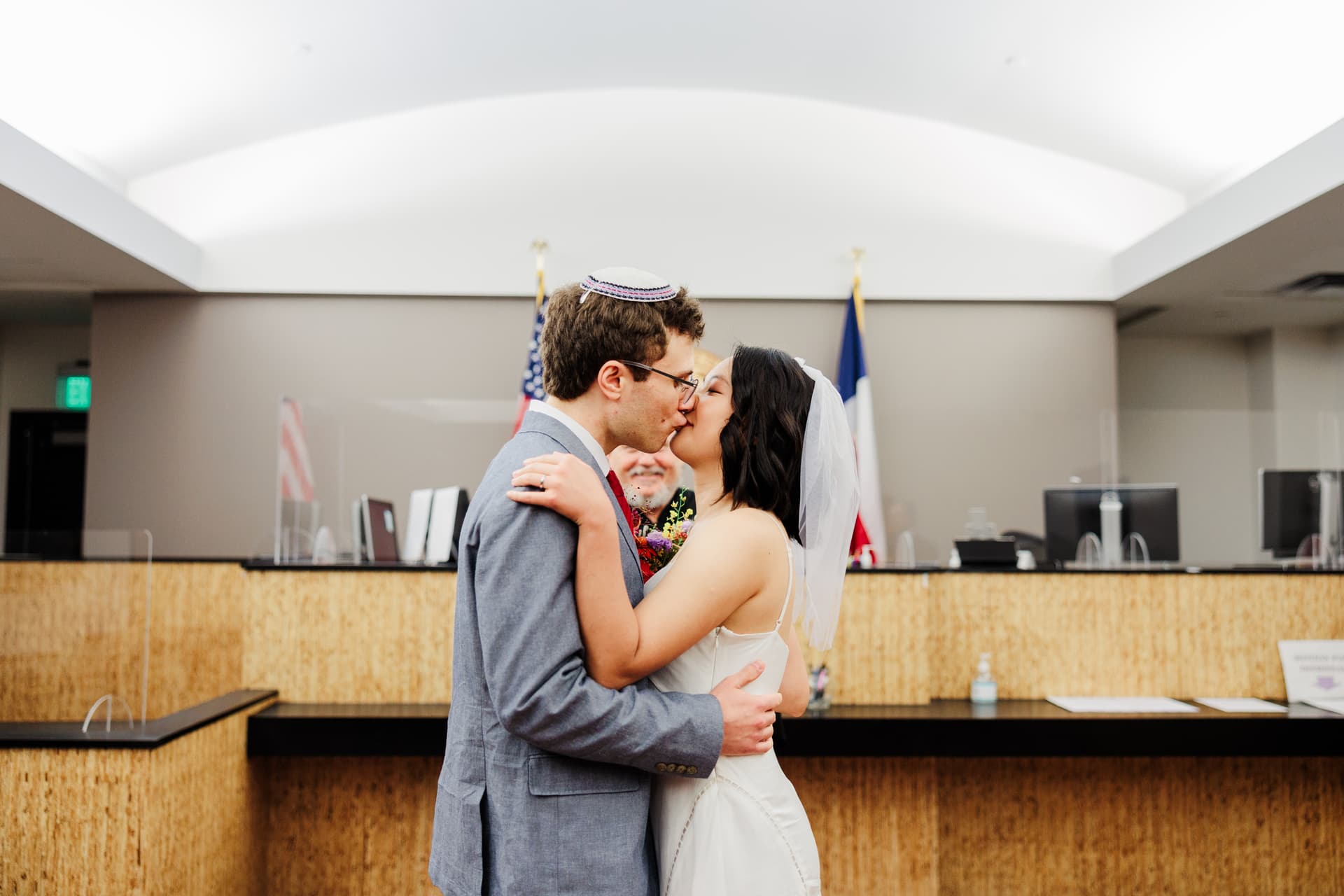
Book it and you'll find out fast: the historic downtown courtroom is the one everybody wants, and its slots go quickly. If your date is fixed, or you're planning on short notice, there's a decent chance you can't have it.
That is not the setback it feels like. Travis County has five justice of the peace precincts, and most of them perform marriage ceremonies. Your Travis County marriage license is valid at any of them, and for that matter anywhere in Texas, so the license you already have doesn't care which courtroom you stand in.
One of them is arguably the better booking. Precinct 4, out on McKinney Falls Parkway, performs ceremonies on weekends and in the evenings as well as during business hours. Read that again if you skimmed the timing section above, because it quietly dissolves the whole problem: an evening or Saturday ceremony means you are not fighting a weekday docket for your light. You can get married at six o'clock and walk straight out into golden hour.
The photos work either way
Here's the part couples worry about, and they shouldn't. Where you sign the paperwork and where you take your portraits do not have to be the same place.
We photograph your ceremony and the moments right around it at whichever courthouse you booked. Every one of these buildings has something worth using: good window light, a decent exterior, a hallway, a set of steps. Then we get in the car and drive downtown for the rest of it, and you have the Capitol and everything else in this guide available exactly as if you'd married five minutes away.
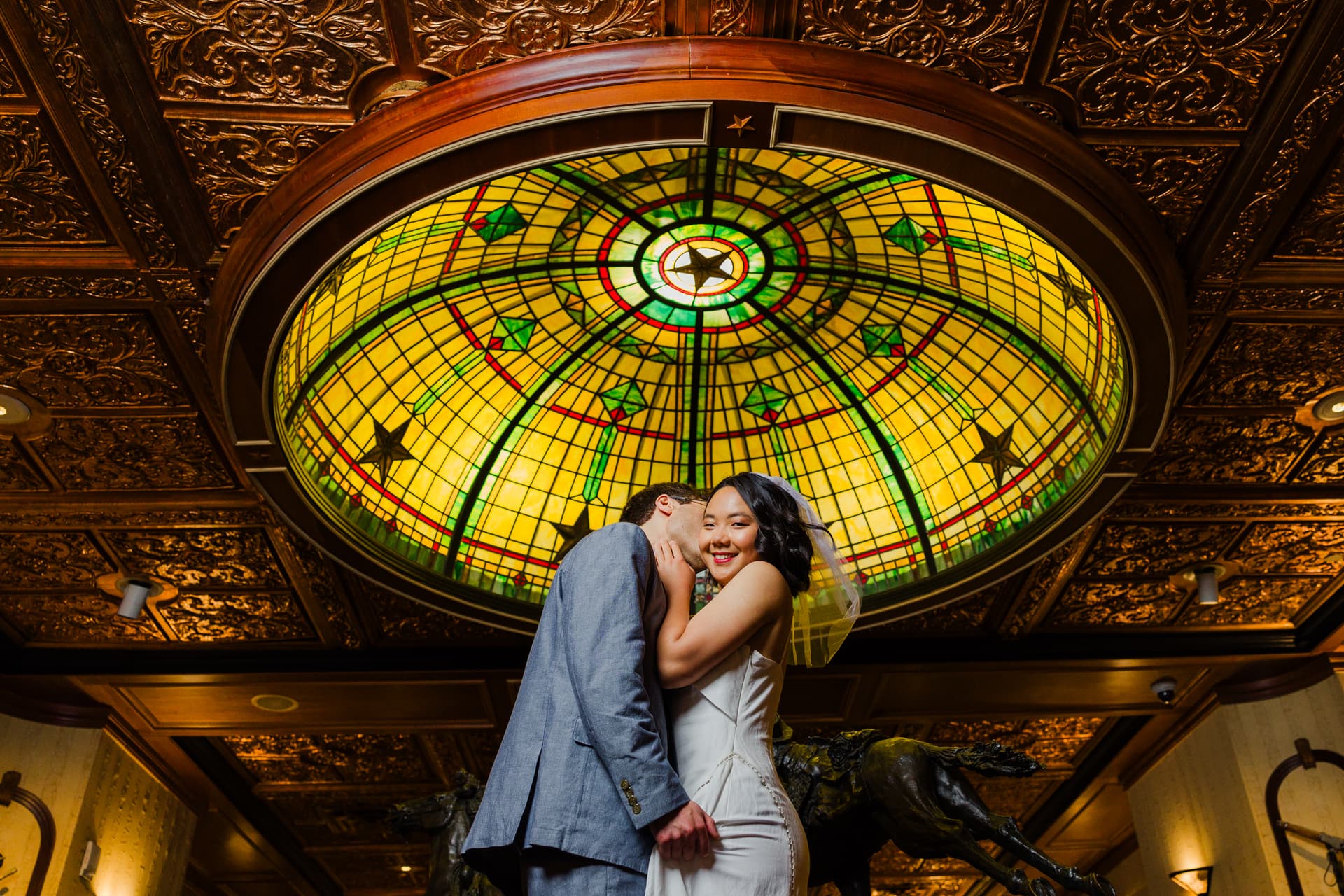
I did precisely this with one of my favorite courthouse couples. They couldn't get the downtown courtroom, so they married at another precinct, we shot the ceremony and their first portraits there, and then we drove into downtown and finished at the Driskill. Grand staircase, old Austin glamour, warm interior light that does not care in the slightest what the weather is doing outside. Nobody looking at that gallery could tell you which courthouse the vows happened in, and nobody has ever asked.
If you want to do the same, note that historic hotels are private property. The Driskill and places like it are far more welcoming when you're a guest, having a drink at the bar, or you've asked in advance. That's a five-minute email, and I'll help you send it.
Where to take photos after
Nothing here is compulsory. Some couples want one more location and some want to go straight to lunch. But if you do want portraits beyond the courthouse steps, these are where I'd take you, and the time of day is what decides between them.
The Texas Capitol
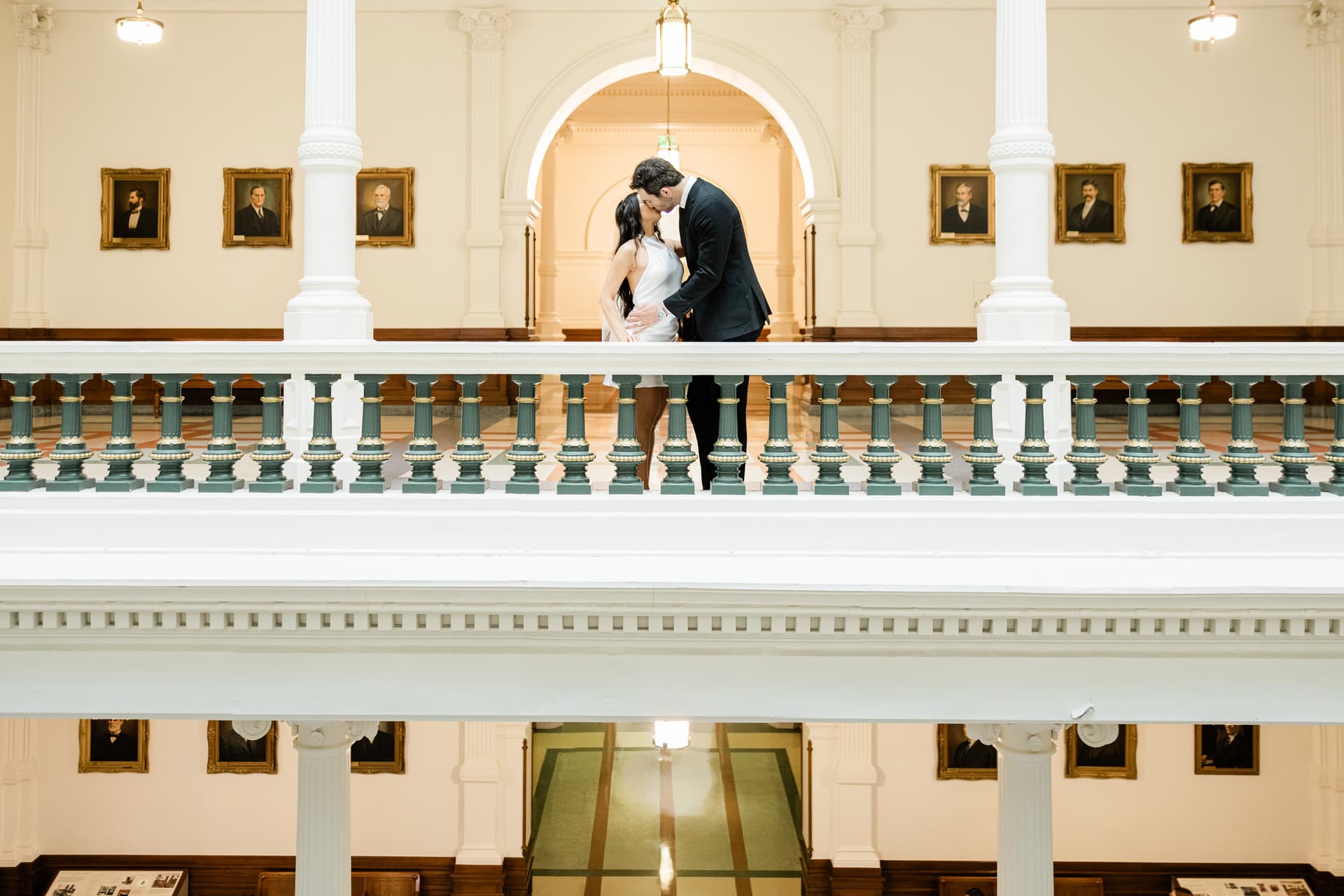
This is the one I suggest most often. It's minutes away, free, open to the public, and it does something no venue in Austin can do: it makes a two-person wedding feel monumental.
The Capitol and its grounds are open 7:00 a.m. to 8:00 p.m. on weekdays and 9:00 a.m. to 8:00 p.m. on weekends. Since your ceremony is a weekday by definition, that 7:00 a.m. opening is a gift if you booked an early slot.
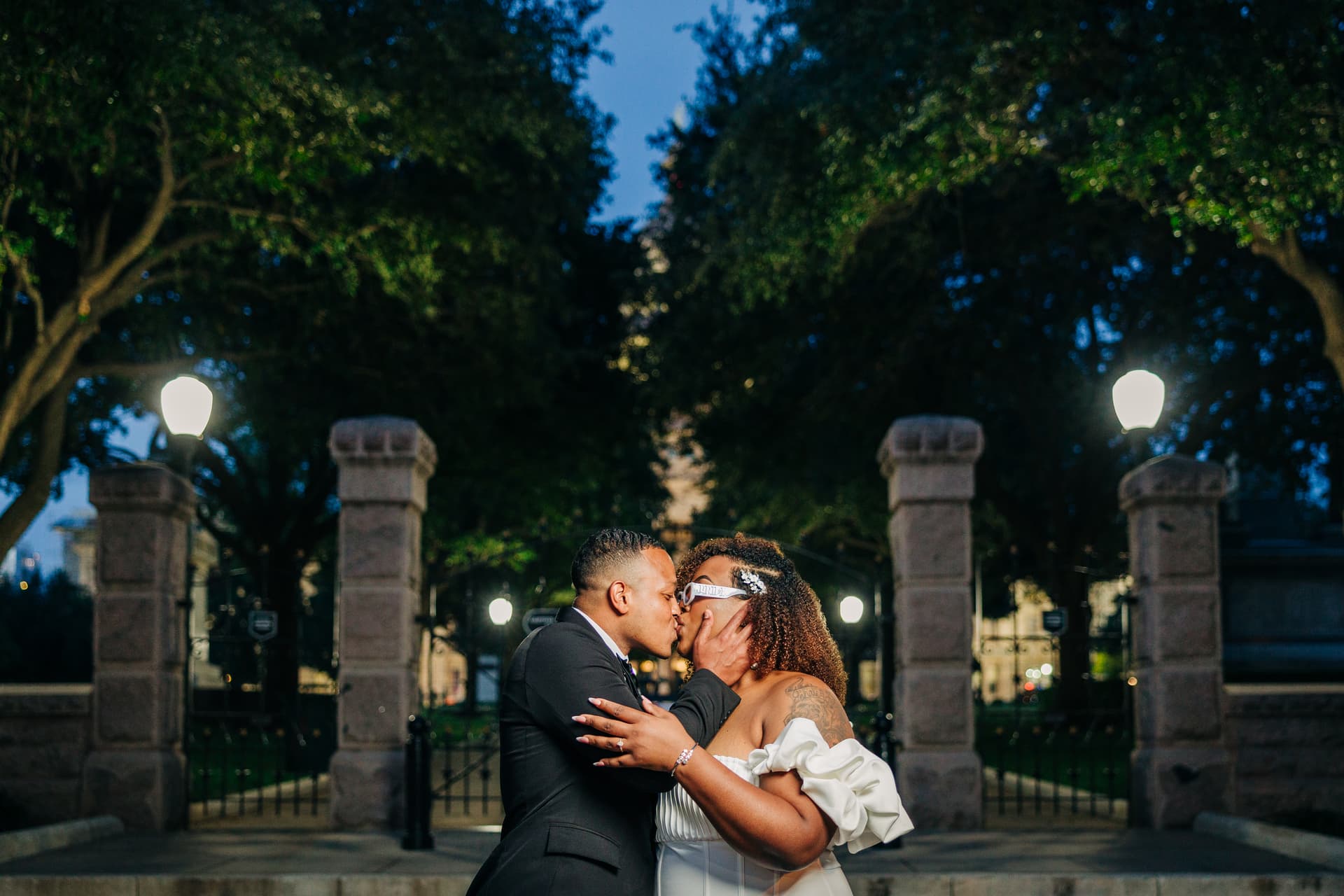
The spots I actually use:
- The south steps and the great walk. The classic. Wide, symmetrical, the dome behind you. Best in the last hour or two before close.
- The rotunda. Walk to the center, look straight up, and there's the star. It's one of the most photogenic interiors in Texas and it costs nothing. Handheld cameras are fine during public hours, which also makes it the answer when the weather turns.
- The tree-lined paths on the south lawn. Where I go when the sun is high and unforgiving, because the canopy does the work.
- The east and west wings. Long shaded arcades, great for the quieter in-between frames.
On permits: for a couple, a photographer, and a handful of guests, you're a portrait session, and portrait sessions don't require a permit. If you're bringing a real wedding party, lighting stands, or anything that looks like a production, contact the State Preservation Board ahead of time. They ask for about two weeks' notice. It's a short email and it removes the only version of this day where someone asks you to leave.
Two practical notes. The Capitol is a working government building, so during legislative session it's busier and occasionally restricted. And the grounds are genuinely popular for photos, especially at weekends, which is a quiet advantage of a ceremony that has to happen on a weekday anyway.
Wooldridge Square
One block from the courthouse. A shaded square with enormous old oaks and a bandstand. It's the closest good option, and it's where I go when the sun is brutal or somebody's shoes have staged a rebellion.
Congress Avenue
The straight shot from the river to the Capitol gives you that framed-dome view down the middle of the street, plus proper downtown texture: storefronts, traffic, the city carrying on around you. Weekday midday is actually the right time for this one, because the energy is the point.
The Ann and Roy Butler trail
Ten minutes south for skyline and water. Worth it if you have the time and want a shot that reads unmistakably as Austin. If you're deciding between downtown backdrops in general, my guide to the best proposal spots in Austin covers a lot of the same real estate from a different angle.
What to wear and what to bring
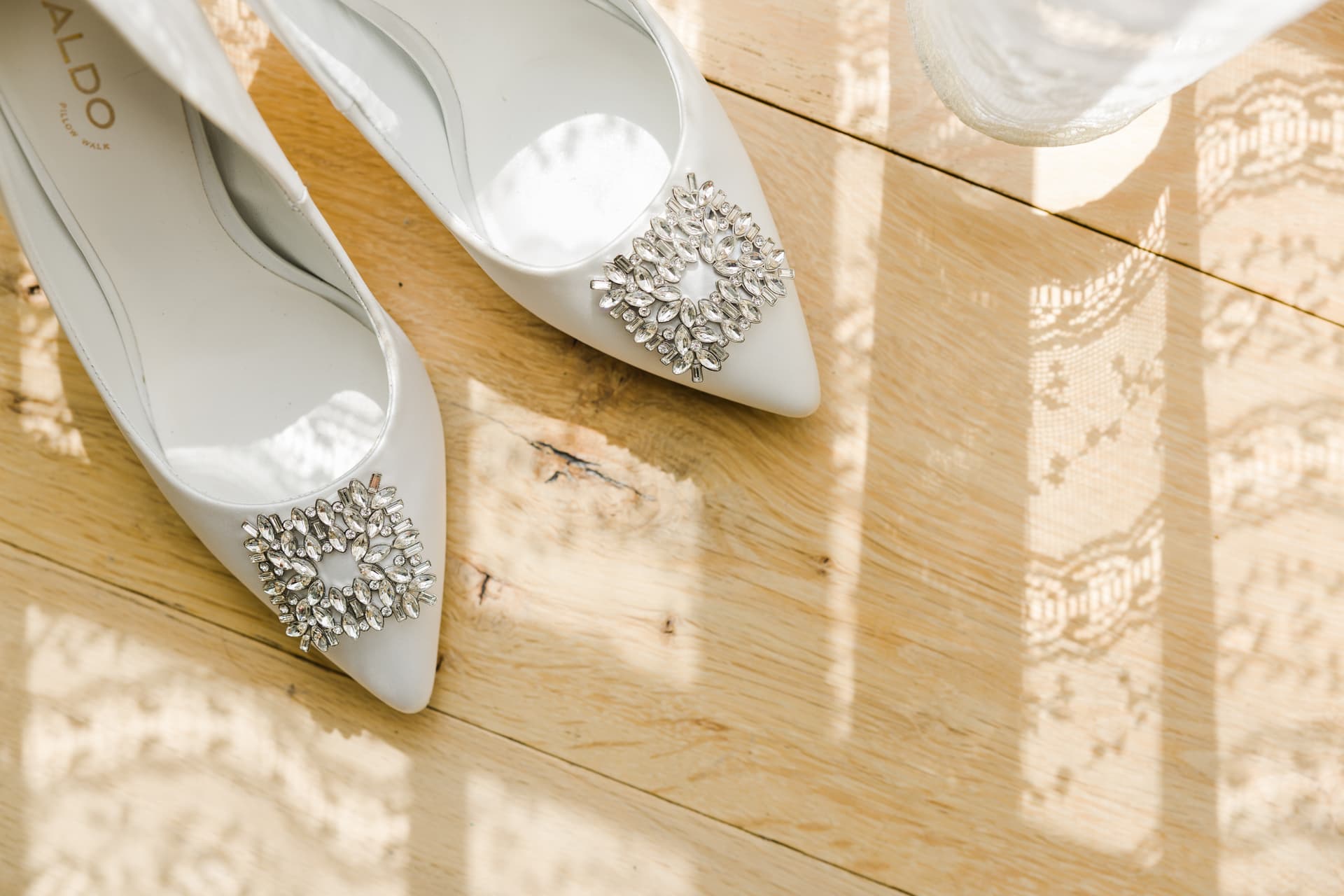
Wear whatever you want. I've photographed full cathedral trains in that courtroom and I've photographed a linen suit and a $90 white slip dress, and the second one looked just as much like a wedding.
One styling note: if you want the dress to photograph well against pink granite, warm ivory reads better than stark white in that light. And you won't be hiking anywhere. We drive between locations and there's plenty of street parking downtown, so wear the shoes you actually want to be photographed in.
Bring: both IDs, the license itself (the actual paper, not a photo of it), your rings, and whoever your witnesses are if the judge requires them. Confirm the witness question when you book, because it varies.
The one thing worth adding: something small that makes it feel like a wedding. A bouquet, a bottle of something cold in the car, a boutonnière. Thirty minutes goes fast, and the details are what make it read as a day rather than an appointment.
What a courthouse elopement costs in Austin
The ceremony side is genuinely cheap:
- Marriage license: $80, or $20 with a Twogether in Texas certificate
- Ceremony fee at the JP: confirm the current amount when you book
- Parking downtown: budget $15 to $25 and do not underestimate this one
Photography is the real line item, and it's the one that determines whether you have a story or a receipt. My rates for this kind of day:
- 1 hour: $500. The ceremony and portraits right around the courthouse.
- 2 hours: $1,000. The ceremony plus one more location, which is what most of my courthouse couples book.
- 4 hours: $2,000. My Just the Two of Us package, built for exactly this: the ceremony, portraits at a couple of spots, and a celebration lunch or dinner photographed afterward. It includes a pre-wedding consultation, 300+ edited images, an online gallery with download rights, and sneak peeks within 48 hours.
Four hours is the cap, and it's genuinely all this day needs. For context, full wedding day coverage in Austin runs $3,000 to $5,000, so even the top end here is a fraction of it. Current rates always live on the pricing page.
Common questions about Austin courthouse weddings
How far ahead of your courthouse ceremony do you need the marriage license?
At least a week, even though the law only asks for three days. The Travis County Clerk calls it a three-day wait and Texas Family Code section 2.204 puts it at 72 hours, but that is a floor, not a plan. Here is the part that catches courthouse couples specifically: your ceremony slot and your license are booked through two different offices, and the slot is the harder one to move. If the clerk's office is slammed the morning you turn up, or one of you is missing ID, or the 72 hours lands an hour short, you don't lose the license. You lose the slot, and the next one might be three weeks out.
So collect the license first and book the ceremony around it, not the other way round. A week of buffer costs you nothing, since the license stays valid for 89 days. If the wait genuinely doesn't work for your timeline, the Twogether in Texas course waives it outright and takes $60 off the fee, and active-duty military, Department of Defense staff and contractors, and anyone holding a judicial waiver are exempt as well.
How many guests can you bring to a Travis County courthouse wedding?
It's a courtroom, so it comfortably holds a small group rather than a crowd. Confirm the exact number when you book your slot, because it depends on the room and the day. Most of my courthouse couples bring somewhere between zero and eight people.
Can you take photos inside the courthouse and the Capitol?
Yes to both. At the Capitol, handheld photography is allowed throughout the public areas during opening hours, rotunda included. At the courthouse, you can photograph inside as well, and there's a beautiful staircase in the building that I use with almost every couple. It's one of my favorite spots of the whole day and it costs you nothing but two minutes. Do still mention photography to the judge's office when you book, so nobody is surprised.
Do you need a permit for wedding photos at the Texas Capitol?
Not for a normal portrait session with a couple, a photographer, and a few guests. If you're bringing a larger group or any production equipment, contact the State Preservation Board with about two weeks' notice.
Is it worth hiring a photographer for a thirty-minute ceremony?
I'm biased, so weigh that. But the honest answer is that you're not hiring someone for thirty minutes. You're hiring someone for the getting-ready nerves, the staircase and the hallway right after, wherever we go next, and the part where you're both laughing because you just got married on a Tuesday afternoon. The ceremony is the shortest and least interesting part of a courthouse elopement. Everything around it is the wedding.
If you're weighing photographers generally, the questions that actually matter applies here just as much as it does to a 200-person wedding.
What if it rains?
The ceremony is indoors, so the legal part is weatherproof. For portraits, the Capitol rotunda is fully covered and beautiful, the courthouse interior gives you a second option, and the arcades along the Capitol wings will keep you dry. A rainy courthouse elopement is one of the few weddings where the backup plan is genuinely as good as the original.
Why this kind of day works
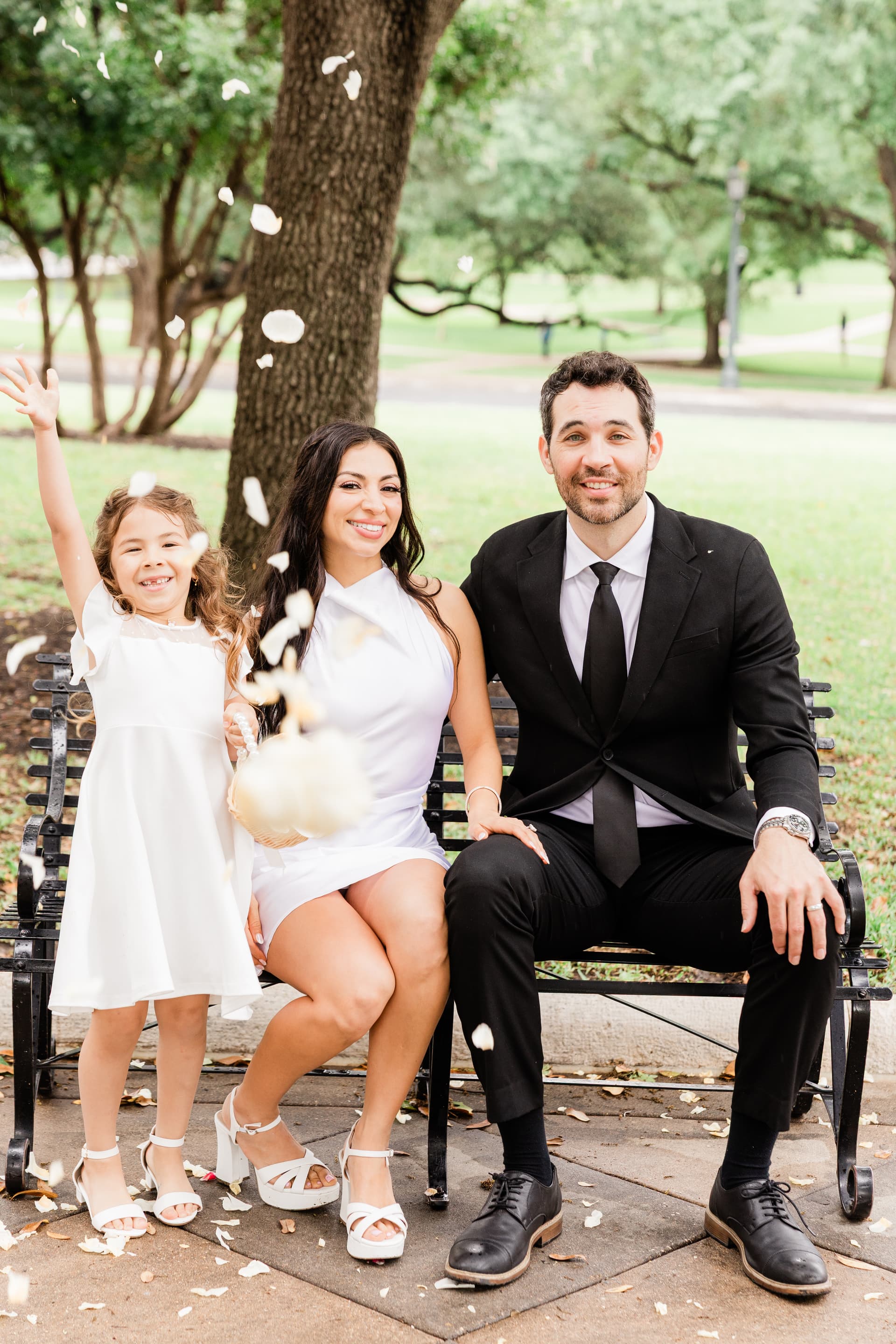
The couples who love their courthouse day are the ones who stopped treating it as the small version of a wedding and started treating it as its own thing.
Thirty minutes in a historic courtroom. A walk up Congress with the dome getting bigger. An hour at the Capitol where the building does the heavy lifting. Lunch somewhere good, still dressed up, in the middle of a workday while everyone else is at their desks.
That's not a downgrade. That's a genuinely great Tuesday.
Ready to plan your Austin courthouse elopement?
I photograph courthouse ceremonies and downtown portrait sessions for couples who want the day to feel personal without turning it into a production.
Tell me your ceremony slot and I'll tell you honestly what the light will be doing, where we should go after, and how much time you actually need. Sometimes that answer is "book the earlier slot." I'd rather say it before you book than after.
Let's talk about your elopement. You can also see how these days look in my couples portfolio, and the full wedding and elopement services are laid out if you want specifics.
Related articles: