
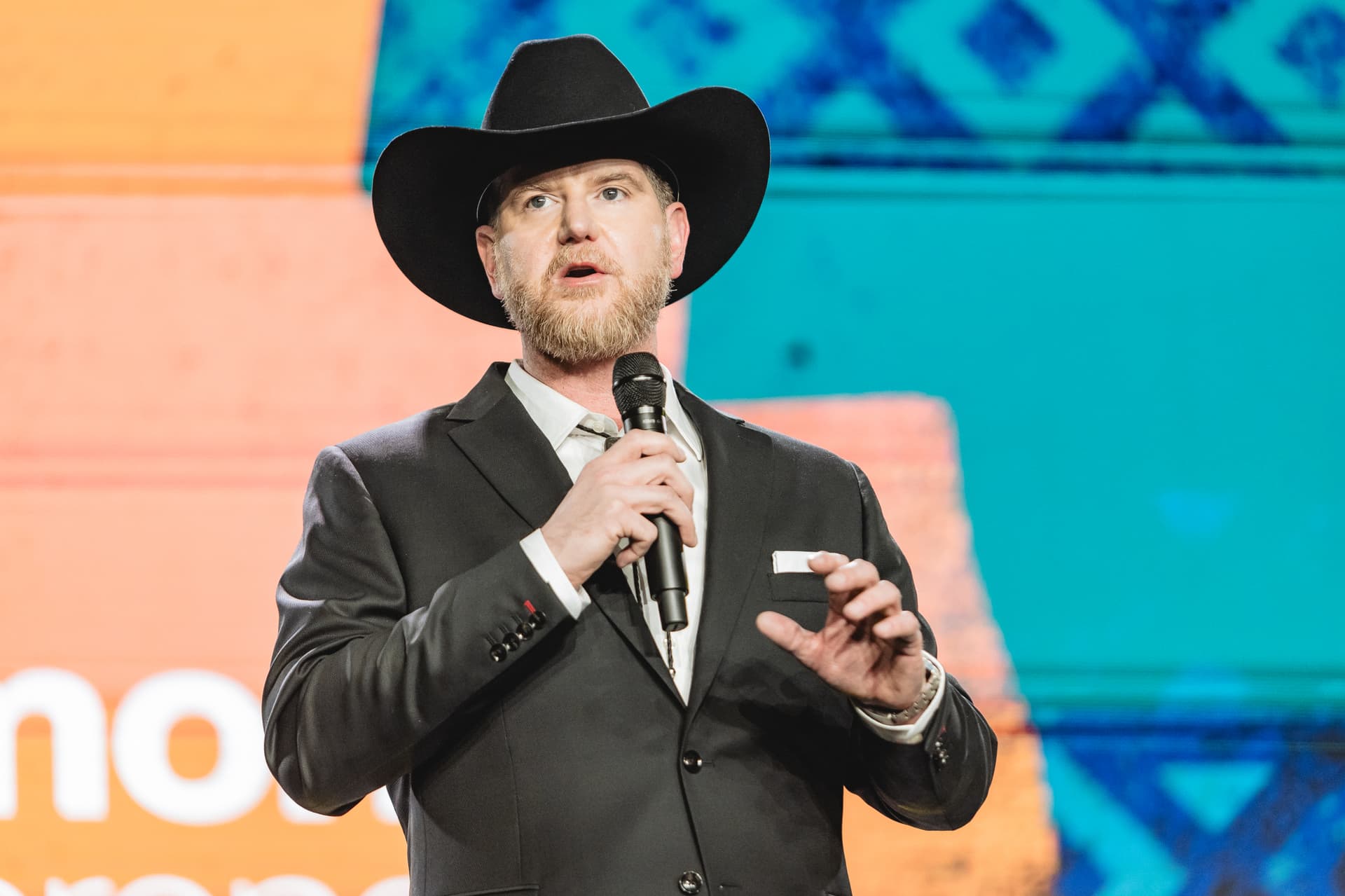
Someone handed you the job: hire an event photographer for the company's next big thing. A conference, a gala, a product launch, the holiday party your CEO actually cares about. You need someone reliable, calm under pressure, and able to hand back photos your team will actually use.
So you search "event photographer Austin" and get thirty near-identical websites, all promising to capture your special moments with professionalism and care. Helpful. How do you pick one out of the pile?
After a decade shooting corporate events around Austin, from tech conferences at the Austin Convention Center to small dinners at Hotel Van Zandt, I've learned which questions separate an event photographer who fits your event from one who's just good at writing a homepage. Here are the ten I'd ask before I signed anything.
1. Can I see a full gallery from an event like mine?
Yes, and if a photographer hesitates, that hesitation is your answer.
Every website leads with the same 20 to 30 frames: curated, polished, arranged for maximum punch. Those prove someone can land a great single photo. They tell you nothing about the other 350 images from that night.
Event photography lives or dies on consistency across a whole evening, not a handful of hero shots. Ask for a complete gallery from a recent event close to yours in size and type, then check whether the quality holds from the first hour to the last, whether the candids are as sharp as the posed shots, and whether the photographer kept color clean through mixed light, from ballroom chandeliers to the dim corners of a cocktail hour in one night. My full corporate events portfolio is public for exactly this reason. A photographer who stands behind their work sends the whole gallery without being asked twice.
2. How do you handle mixed lighting?
Ask for specifics, because a corporate event is a lighting minefield and vague reassurance is a red flag.
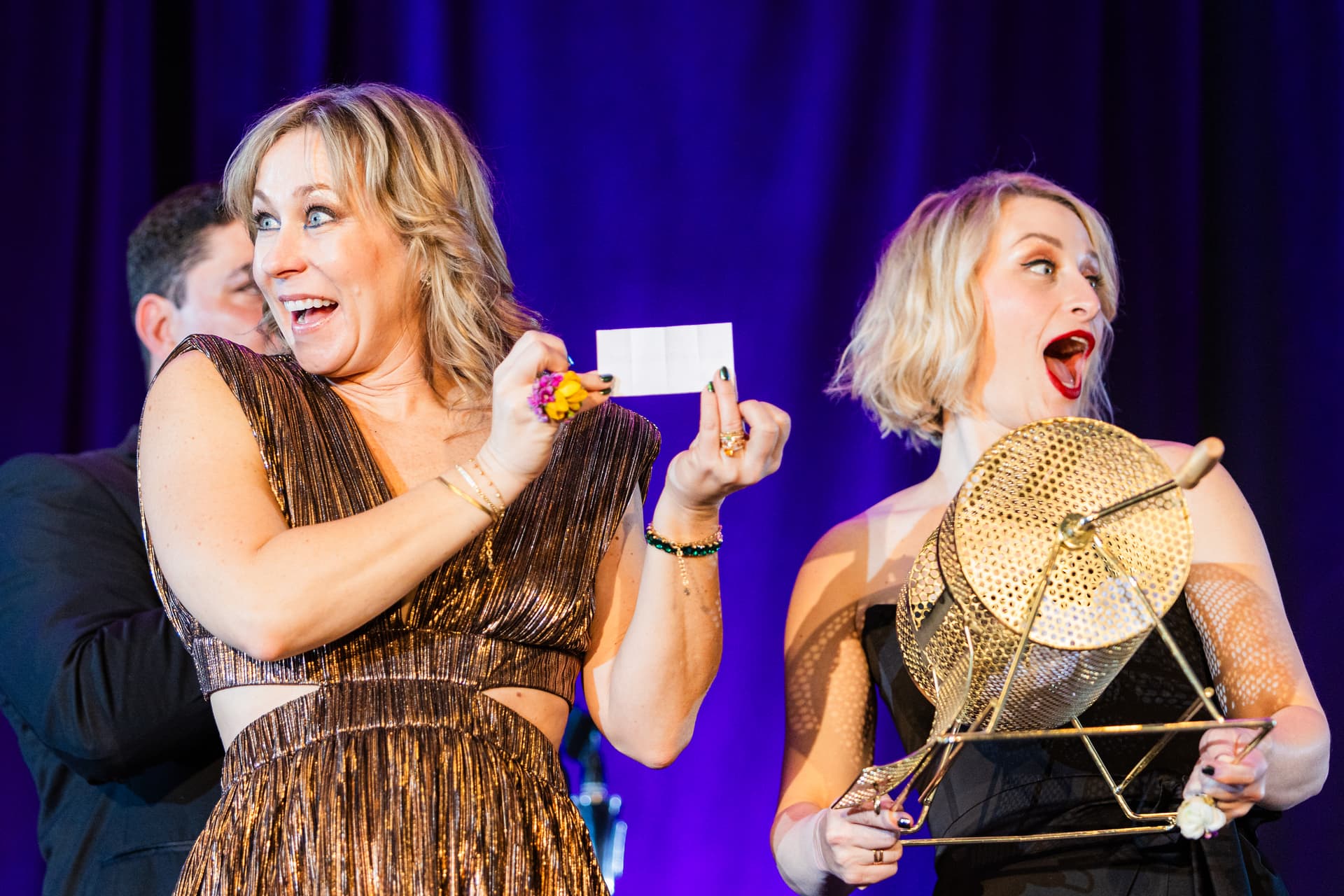
In a single evening you might move through a bright windowed cocktail hour, a dim tungsten ballroom, a stage lit with colored LED uplighting, a dance floor of shifting DJ colors, and a patio at dusk with the daylight draining away. Each one wants a different setting. A photographer who mostly shoots studios or golden-hour portraits will struggle to keep color consistent across all of it without slowing your night down.
Listen for real technique. "I bring off-camera flash and shape it to the room, and I set white balance on the fly" is an answer. "Don't worry, I'll make it work" is not.
3. What's your turnaround, and can I get selects faster?
Full galleries usually land in 7 to 14 business days; the more useful question is whether you can get a handful the next morning.
I deliver most events within 7 business days, which is the fast end, because timely content is the only content your team can actually use. But if marketing wants recap photos posted the morning after, or your CEO needs a keynote shot for LinkedIn that same week, a two-week wait defeats the point. Ask whether the photographer can turn around 5 to 10 select images within 24 to 48 hours of the event.
That fast-select delivery isn't always baked in, and for a big event it's often the piece you need most. Most professionals are happy to offer it, sometimes included and sometimes as an add-on, so raise it before the event and confirm they can actually deliver.
4. How many final images will I get?
Enough to fill a content calendar, and a good photographer can give you a rough number before the event so your team can plan around it.
| Event Length | Typical Image Count |
|---|---|
| 1-2 hours (cocktail reception) | 50-150 images |
| 3-4 hours (conference or gala) | 200-400 images |
| 6-8 hours (full-day conference) | 400-700+ images |
The count moves with the event's pace, the headcount and the shot list. A packed 200-person gala produces more frames than a quiet 50-person cocktail hour. While you're at it, ask what format the files arrive in. High-resolution JPEGs for print, web-optimized versions for social, or both? You don't want 400 huge files when all you need is a social-ready set, or the reverse.
5. Do you work from a shot list?
The good ones do, and then they know exactly when to ignore it.
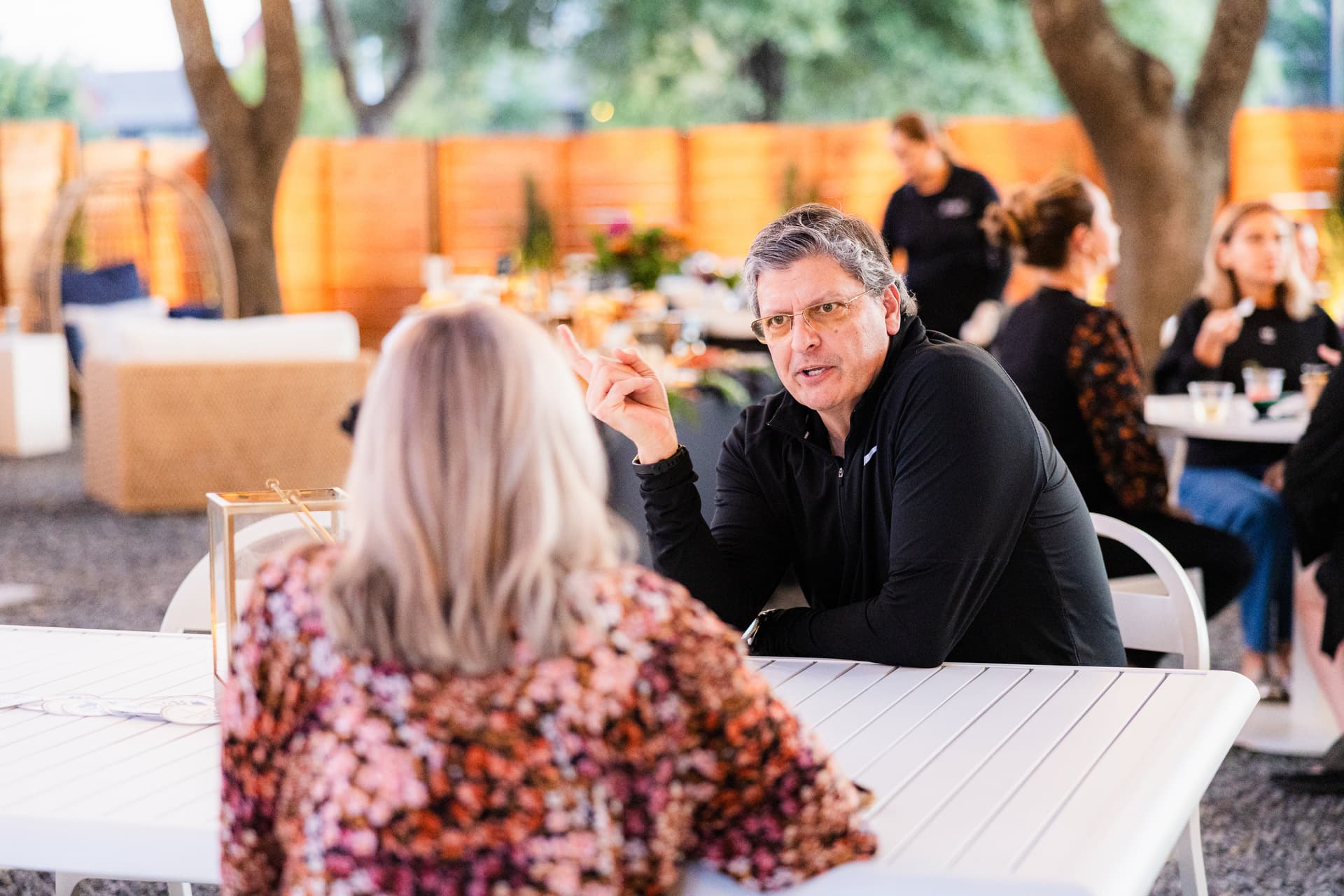
A shot list guarantees nothing critical slips: the keynote, the award presentation, the sponsor signage, the VIP your boss specifically named. Leave those to chance and one of them will go missing. But a photographer who only works the list misses the better material, the spontaneous handshake or the quiet moment between colleagues that shows your culture more honestly than any posed frame.
What you want is someone who helps build the list from experience, treats it as a framework rather than a script, and still has the instinct to catch what isn't on paper. My own process: clients send their must-have shots at least a week out, I add suggestions from what's worked at similar events, and on the day the list lives in my back pocket while my camera stays pointed at whatever's actually happening.
6. Will you blend in or stand out?
Both, depending on the moment, and the ability to switch between them is what you're really paying for.
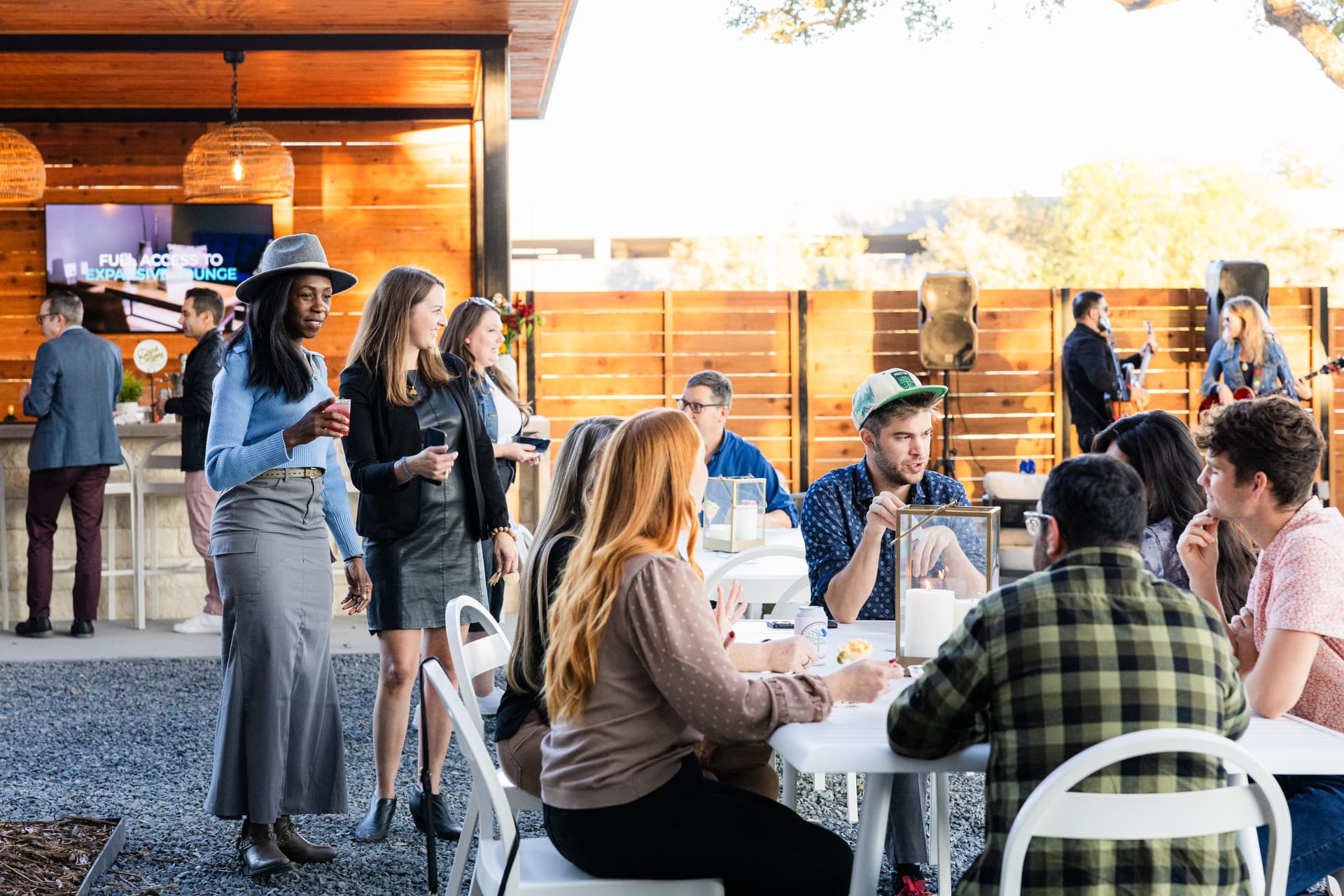
Some stretches call for a photographer who's nearly invisible, moving through a cocktail reception without breaking a conversation or blocking a sightline. Board dinners and VIP receptions run this way. Others need a visible, active presence directing group photos, coordinating with AV for stage shots, planting themselves front and center for the keynote. Galas and milestone celebrations run the other way.
Ask it plainly: "How do you stay present without being disruptive?" A good event photographer reads the room. During cocktail hour I'm a ghost on the periphery with a long lens. During the award presentation I'm in the front row with a wide lens, fully visible, because that's where the shot lives.
7. What happens when something goes wrong?
Something always goes sideways at a live event, so the real test is whether the photographer adapts without hand-holding.
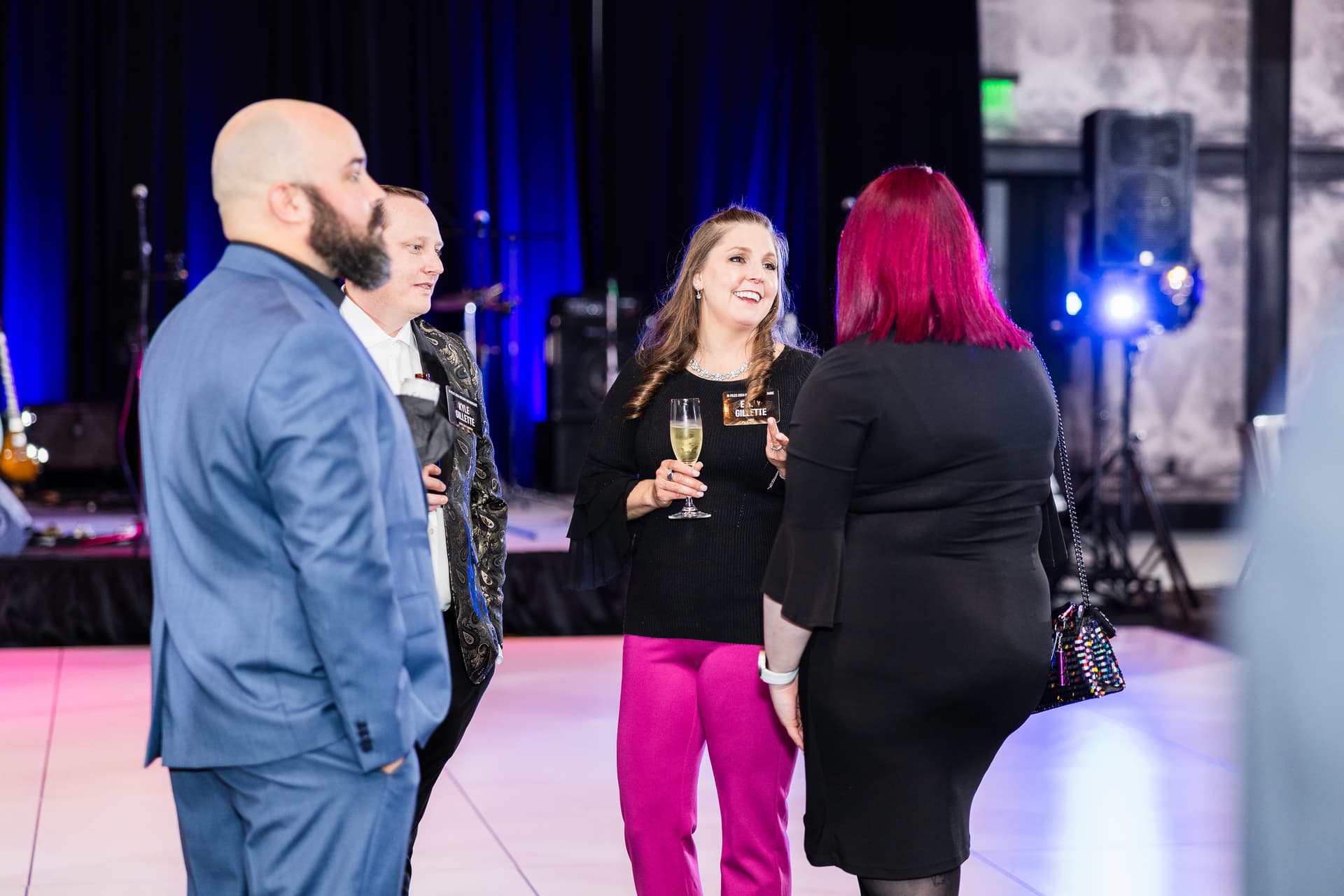
The schedule slips, the light is nothing like the walkthrough, a VIP arrives early, the venue moves a presentation to another room. Push on the specifics. What happens if the event runs long, and is there overtime or grace built in? Do they carry backup bodies, lenses, flash, and memory cards? Have they ever had gear fail mid-event, and what did they do?
You want concrete contingencies, not "it'll be fine." At a corporate event there are no do-overs, so no backup equipment is a genuine risk. I carry two camera bodies, 8-plus lenses, 4-plus flash units, and enough cards for 10,000-plus images to every event. A body has failed on me mid-event exactly once; I switched to the backup in under 30 seconds and the client never noticed. That's the entire reason backups exist.
8. What's the full cost, with no surprises?
Corporate event coverage in Austin generally runs $150 to $500 per hour depending on experience, deliverables and event complexity, but the hourly rate is never the whole number.
| Potential Add-On | What to Ask |
|---|---|
| Travel | Is travel to the venue included, or billed on top? |
| Overtime | What's the rate if the event runs long, and is there a grace period? |
| Editing | Is full editing included, or is retouching per-image? |
| Rush delivery | What does faster-than-standard turnaround cost? |
| Usage rights | Do I own the images outright for ads, social and print? |
| Second shooter | Does my event size need one, and what does it add? |
Get all of that in writing before you book. My own quotes are all-inclusive: shooting time, editing, high-resolution delivery with full commercial usage rights, an online gallery, and travel within Austin. Run 30 minutes over and I don't start a meter. If you want to compare the moving parts across the market, the corporate breakdown lives on the pricing page.
9. Have you shot events my size, and at my venue?
A photographer who's brilliant at a 30-person dinner can drown at a 500-person conference. The skills overlap; the execution doesn't.
- Under 50 people is intimate. One photographer can catch individual candids with most of the room.
- 50 to 150 people is mid-size. Coverage gets strategic, working the space systematically to hit every group and key moment, and one photographer still handles it.
- 150 to 300 people is large. A seasoned event photographer can cover it solo, but an on-site coordinator to keep the schedule and flag changes makes a real difference.
- 300-plus people is major. It usually needs a second shooter for at least part of the event, plus advance coordination with the venue and AV team, and the shot list and a tight timeline become non-negotiable.
Ask whether they've worked at your scale, and ideally at your exact venue. Multi-day and large-format events have their own playbook. A photographer who's shot the Austin Convention Center already knows each ballroom's lighting quirks, where the outlets are for flash, and which angles hold up for stage shots. That knowledge buys you time and better frames.
10. What's your editing style?
It should match your brand, not override it, and this one gets skipped far too often.
Some photographers default to a warm, moody grade that plays on Instagram but clashes with a clean, modern company look. Others shoot bright and airy in a way that feels wrong for a black-tie gala. The editing has to serve both the room's atmosphere and your visual identity, so share your style guide if you have one.
When I shot brand work with Holey Moley, their guide called for wide-angle, high-energy, slightly chaotic frames, the polar opposite of how I'd edit a law firm's awards dinner. Both are editing & shooting styles I am comfortable with; the grade serves two completely different brands. If you want the images to double as marketing assets, it's worth reading how I plan a brand shoot so the look is decided before the day, not after. A professional adapts to your palette instead of stamping a signature filter on everything.
Red flags to skip before you hire an event photographer
You've asked the right questions. Here's what should send you back to the search results.
- Only a highlight reel to show. If they won't share a full gallery, you can't tell whether the quality holds all night.
- Pricing that lives on "it depends." A professional event photographer can quote after a ten-minute conversation about your event.
- No backup equipment, which is non-negotiable for a corporate event.
- Slow replies. Five days to answer your first inquiry tells you how reachable they'll be the week of the event.
- No shot-list process. Winging it is fine for a backyard party, but with stakeholders and sponsors watching you need a plan.
- Reluctance to arrive early. Good photographers show up before doors to scout light and meet the AV team; rolling in at start time means scrambling through the first 20 minutes.
The bottom line
A good event photographer does more than take nice photos. They read the pace and the priorities of your specific event and hand back consistent, professional coverage from the first handshake to the last toast. The right one makes your job easier: they anticipate the moments, roll with the chaos, and give you a gallery that makes the team look good. Want to see what that coverage actually looks like on the page? I wrote a full piece on what a great corporate event photographer delivers.
The wrong one hands you a folder where the CEO is blurry in half the frames, the sponsor signage never shows up, and the lighting looks different in every shot. Ask these ten questions and you'll know which one you're hiring before you sign.
Planning a corporate event in Austin? Tell me what you've got in the works and I'll give you a straight answer on pricing, process, and whether I'm the right fit.
Related: