
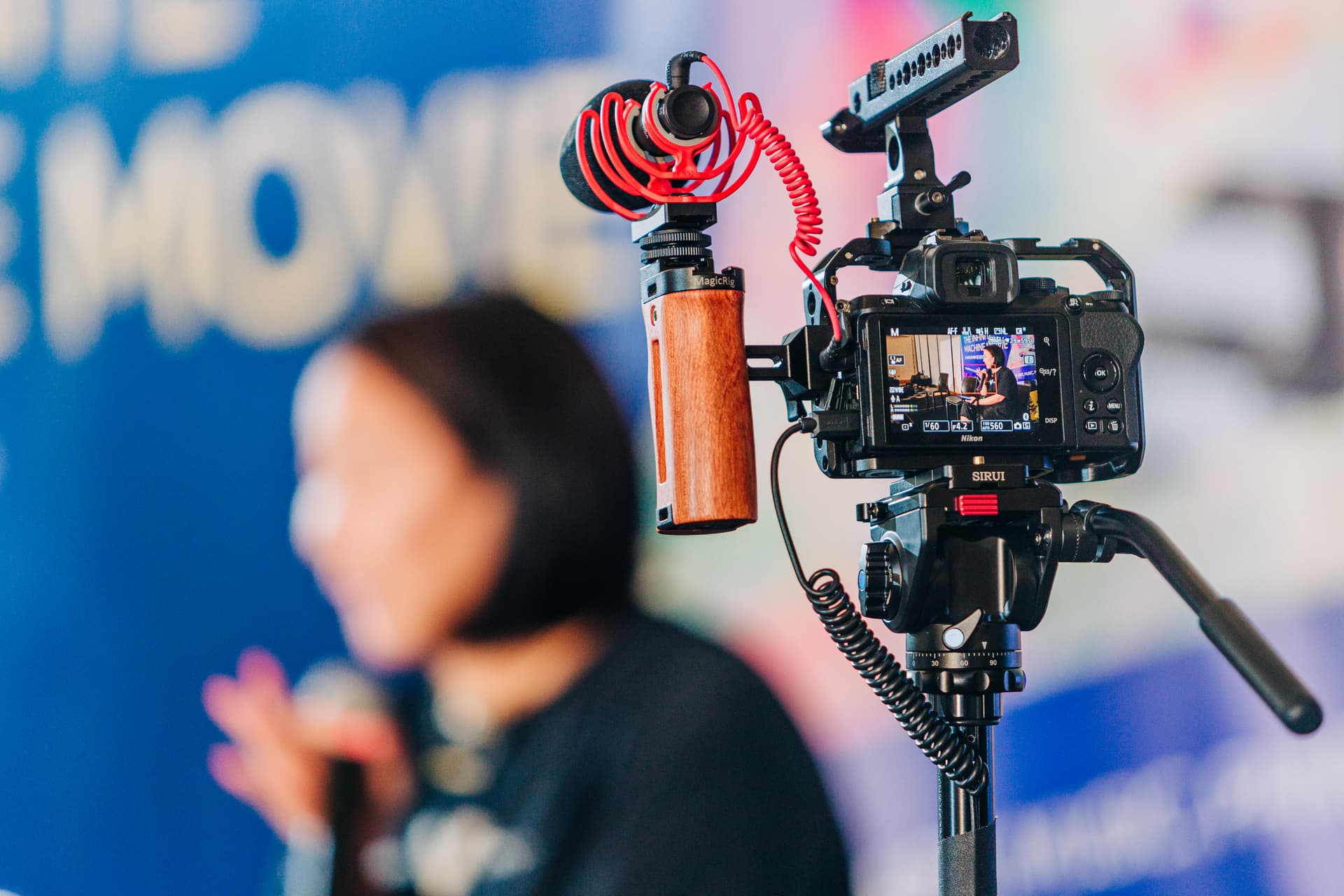
Every March, SXSW takes over Austin and the whole city changes shape. Thousands of panels, showcases, mixers, and late-night parties pile into dozens of venues over ten-plus days, and for a photographer it's the busiest, strangest week on the calendar. I've shot SXSW in Austin for years now: a 30-person panel at Brazos Hall, a packed industry party at Distribution Hall, the full house at The Paramount Theatre. Here's what actually makes photos work in the crowds, and what you should know before you hire someone to cover your event.
What is SXSW, and why does it change how you shoot it?
SXSW (South by Southwest) is Austin's sprawling March festival of tech, film, and music, running ten-plus days across dozens of venues with thousands of panels, showcases, and parties. That scale is exactly why it breaks the way I'd normally shoot a corporate event.
At a regular company event I get a walkthrough. I know the room, the light, and the run of show before I lift a camera. SXSW hands you none of that. You might shoot a morning panel in a bright hotel ballroom and an evening mixer on a rooftop bar the same day. Lighting swings from flat conference fluorescents to dim cocktail lounges to outdoor stages. The mood flips fast, heads-down for a panel one hour and loud for a badge-and-drinks party the next. And the crowds are dense, so moving through a room with gear becomes its own small skill.
What that adds up to: you want a photographer who can read a room fast and get the frame before the moment's gone. This is closer to street shooting than to a posed corporate gallery. If you want the fuller picture on the everyday version, I wrote up what great corporate event photography looks like separately.
How do you photograph a SXSW event?
Match the coverage to the type of event. A keynote, a reception, and a 1am party each want a different lens and a different kind of patience. Here's how each one goes.
Panels and keynotes

Panels are people sitting in chairs talking, so the whole job is expression and body language. I work several positions through a session: side-stage for speaker close-ups that catch a gesture or a laugh, back of the room for a wide shot that shows a full, engaged house, and down at audience level for the nodding, note-taking reaction shots.
Most conference rooms are bright and evenly lit, so I can usually shoot with the room's own light and skip flash that would pull focus from the speaker. When a space runs dark (some hotel rooms are surprisingly dim), I add a little off-camera flash aimed to read like ambient light. You get sharp speaker frames and wide shots that show a full house. The audience reactions work as social proof too. Tell me your key speakers and must-catch moments ahead of time, and I'll be in position for the product demo or the surprise guest.
Networking events and receptions
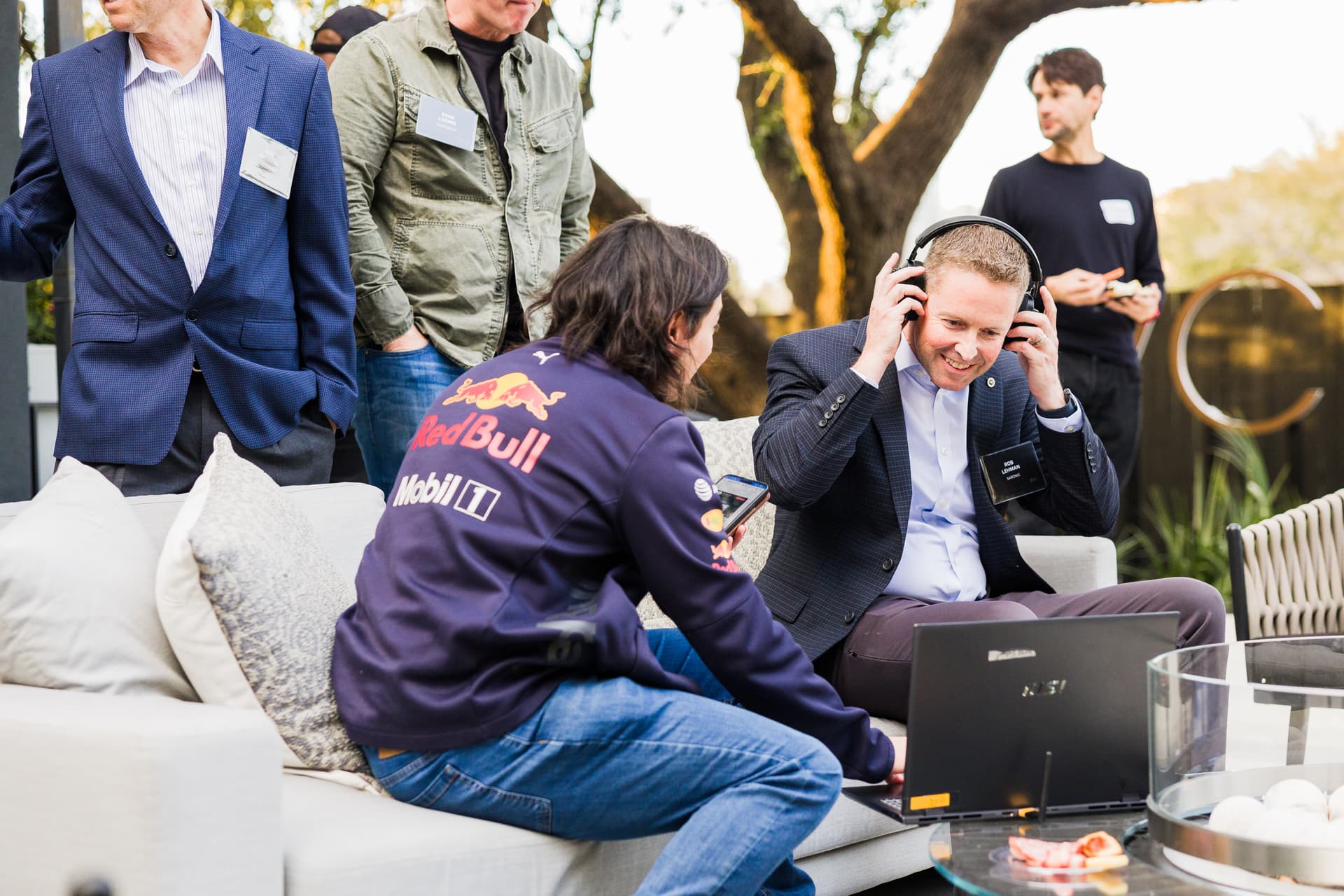
Here I go fully candid. I move through the crowd with a longer lens and catch the real handshakes, laughs, and small-group talk without breaking them up. The best networking photos look like nobody tapped two strangers on the shoulder and said "smile." Alongside that I grab wide shots of a buzzing room (gold for promoting next year), detail shots of branded signage and food that show sponsors their money did something, and portraits of the people who matter to you in context.
Receptions usually run in the evening with mixed light: some window light, some venue ambient, some colored accent fixtures. I blend on-camera flash with what's there so the mood holds, then drop in off-camera flash to shape the wider room. Point out your VIPs when I arrive and I'll make sure they're covered without hovering.
Parties and brand activations
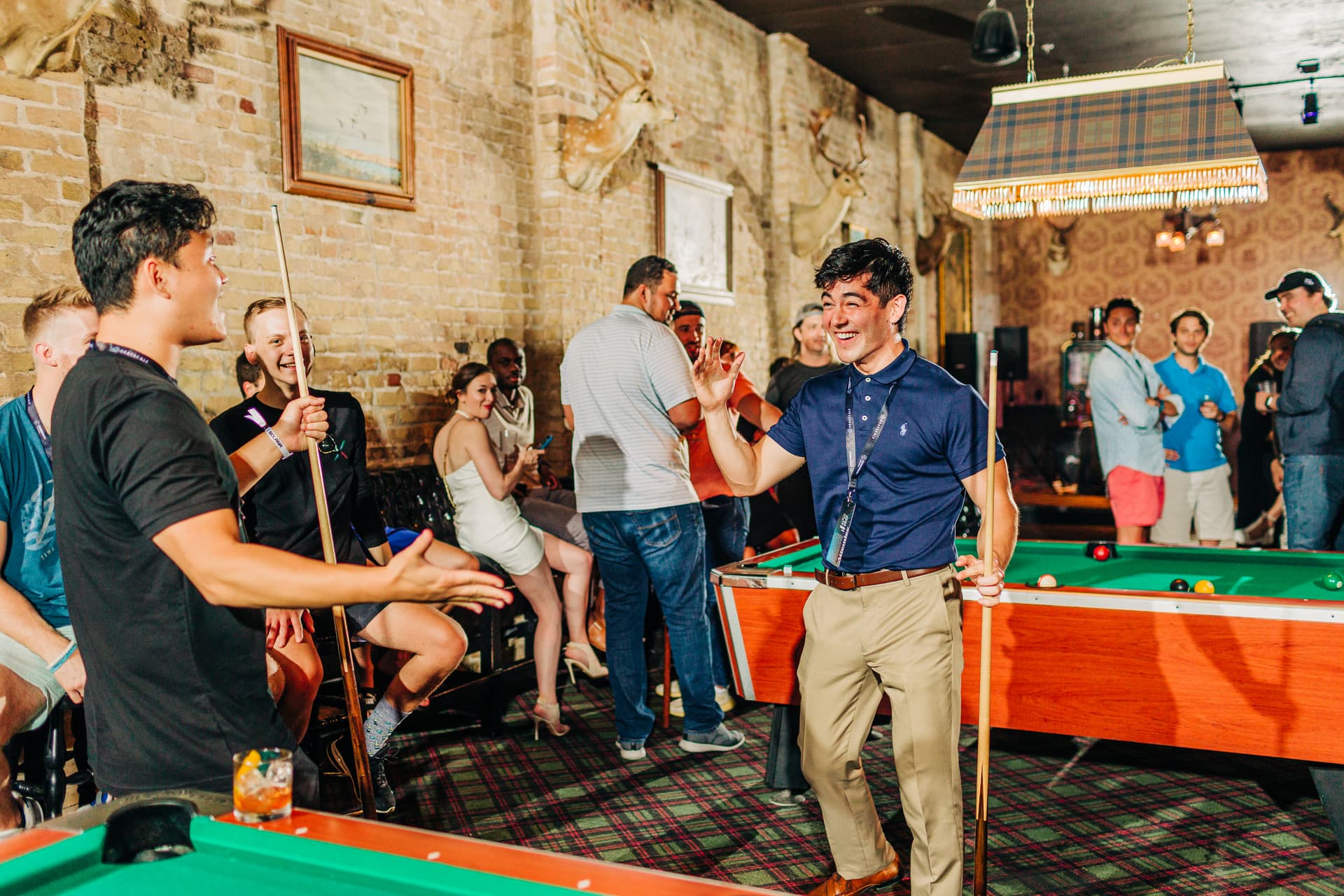
SXSW parties run at a different speed. Toasts, impromptu speeches, group shots, dance-floor moments, brand activations, all of it lands fast, so I stay mobile and read the room to get ahead of the next thing. This is where the years add up. I know the energy tends to peak right after a toast or when the music jumps, and that the best candids happen in the messy handoff between the formal part and the loose part.
The light at these is often dramatic on purpose: neon brand colors, stage washes, dim atmosphere. I shoot fast glass that holds up in low light and mix off-camera flash with the existing vibe so the photos feel like the party felt, not like a crew walked in and killed it. Give me room to move between the stage, the back bar, and the floor, and the pictures get better for it.
What should organizers know before booking a SXSW photographer?
Book early, tell me exactly how you'll use the shots, and don't expect the gallery overnight. Those basics matter more than anything I fix on the day. Here's the detail.
Book early
SXSW is the busiest week of the year for Austin photographers, so reach out one to two months out. By March, most of us who do this regularly are already booked for the main conference days. If you're weighing who to hire, I put together the questions to ask any event photographer before you sign.
Share how you'll use the photos
"Take photos at our event" is a wish. "We need 20 social-ready images by midnight for LinkedIn, plus a full gallery for the annual report" is a brief I can actually work from. A case study, a next-year promo, and an investor update each point me at different shots, so the more I know about the end use, the smarter I spend my hours in the room.
Plan for fast turnaround
SXSW moves fast and your social should too. I deliver select images same-day for social during multi-day coverage, with the full edited gallery landing 7 to 14 business days after it wraps. Running a multi-day presence? We can set up nightly batches of highlights so your team posts in near real time.
Budget for peak season
SXSW week is premium: demand is high and the work is intense. Rough ranges I quote:
- Half-day event (2-4 hours): $800-$1,500
- Full-day event (6+ hours): $2,000-$2,750
- Multi-day coverage: custom packages based on schedule and deliverables
- Rush delivery: $300 for a 24-hour gallery turnaround
You're paying for someone who can hold up in fast, unpredictable rooms and still deliver clean work on a tight clock. For a full breakdown of how event rates get set, see the corporate event pricing page.
What does SXSW photography actually get you?
Your SXSW event happens once, but the photos keep working long after the badges come off. You've got same-day social content while it's live, then recaps and thank-you emails for weeks. A year out, the strongest frames become next year's marketing and website images.
The companies that invest in real coverage are the ones whose 40-person hotel-ballroom panel still reads as a must-attend moment of the week. Good photography does that.
Planning a SXSW 2026 event? Let's talk now, because my March calendar fills up early. You can also browse recent corporate and event work or see how event coverage is set up.
Related: